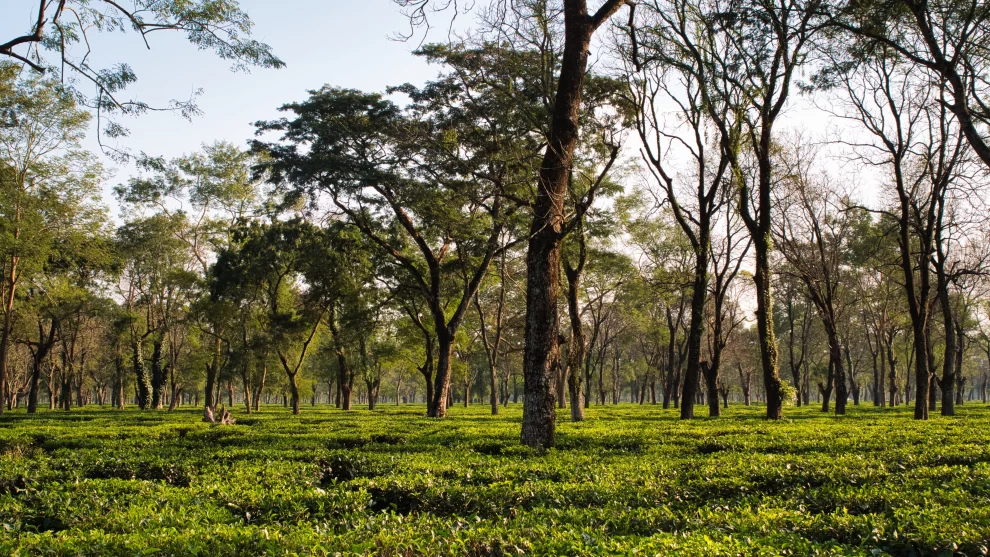
There is a certain stillness to tea gardens in Bangladesh. An almost cinematic calm that draws travelers into their soft, undulating green. From a distance, the estates of Sreemangal and Sylhet appear as landscapes of quiet perfection. Neatly pruned rows stretch endlessly across hills, framed by mist and filtered sunlight.
But the deeper one walks into these gardens, the more layered the story becomes.

The Beauty That Draws You In
Tea gardens are, without question, among the most visually striking landscapes in Bangladesh. The symmetry of the plantations, the gentle slopes, and the rhythm of workers moving through the fields create a sense of order that feels almost meditative.
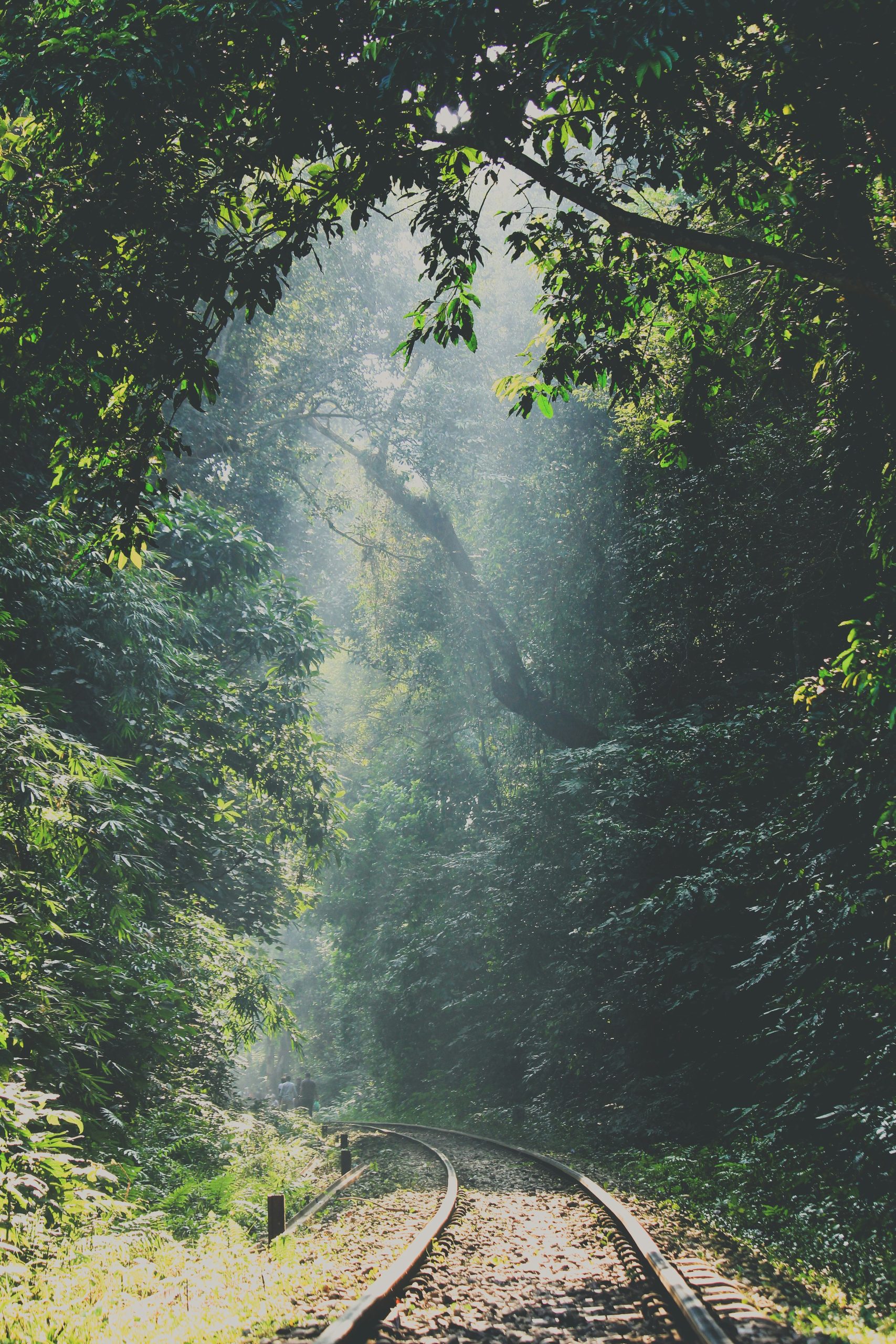
For visitors, the experience is often about escape. A retreat from urban density into something calmer, slower, more deliberate. Early mornings in these estates are particularly striking, when the fog lingers low and the day unfolds quietly.
Yet, this beauty is carefully constructed. Every bush, every pathway, every contour is shaped by years of human labour and agricultural precision. What appears natural is, in fact, deeply managed.
The Hands Behind the Landscape
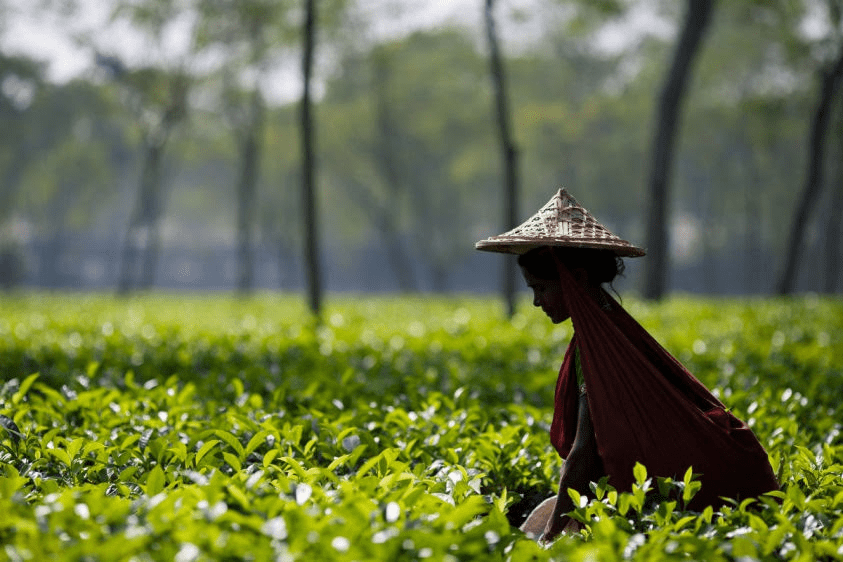
At the heart of this landscape are the workers; many of whom belong to generations of tea garden communities. Their day begins early, often before the sun has fully risen. Armed with baskets and trained instinct, they move through the rows, plucking leaves with speed and consistency.
The work is repetitive, physically demanding, and highly disciplined. Productivity is measured by weight, and meeting daily quotas is essential. According to industry observations, a worker may pluck 20 to 25 kilograms of tea leaves in a single day, depending on conditions.
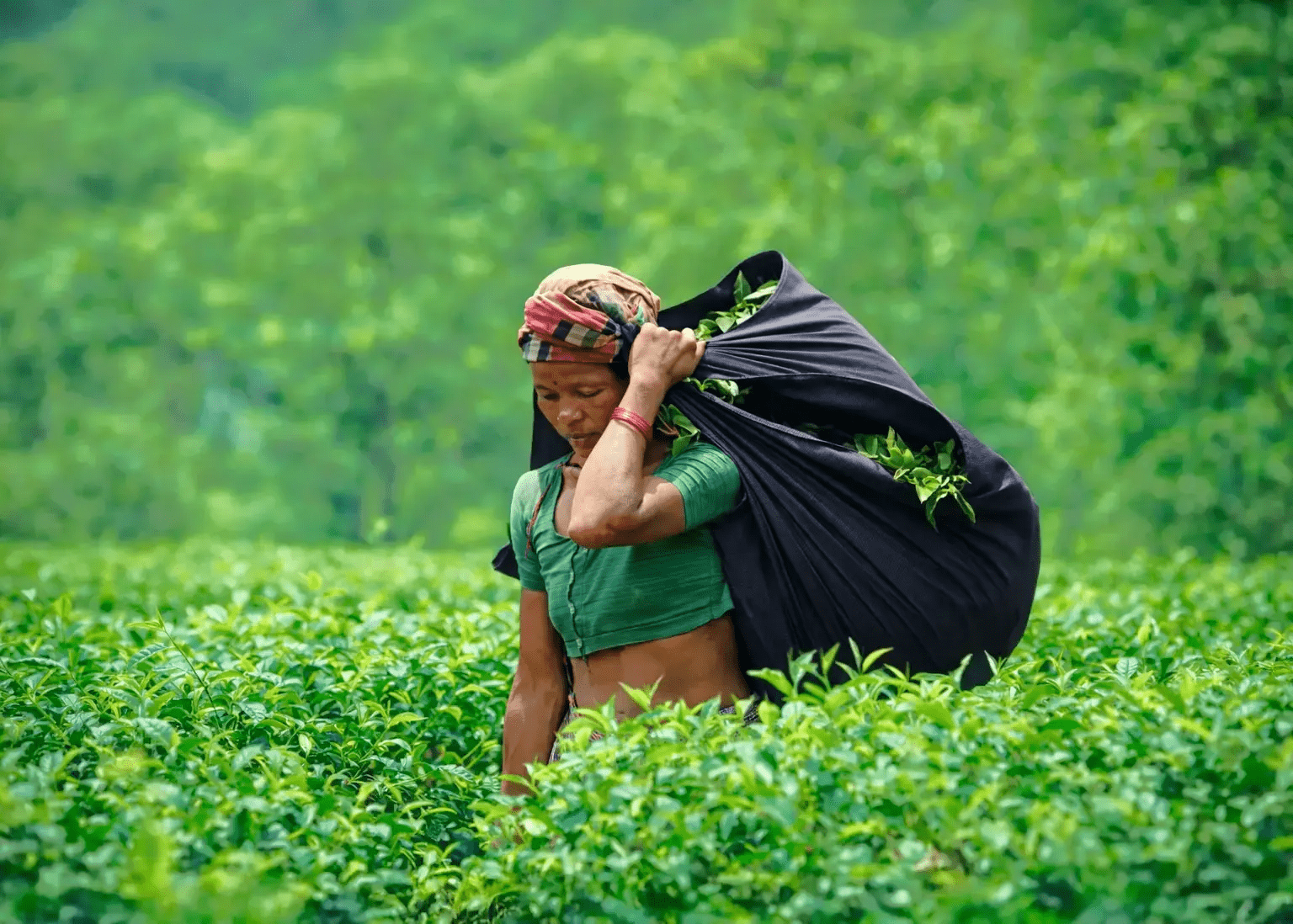
Yet, beyond the metrics lies a deeper reality. Many of these communities have historically remained economically and socially marginalized. Access to education, healthcare, and upward mobility remains uneven, despite gradual improvements in recent years.
There is resilience here, but also quiet endurance.
A Legacy Rooted in History
The tea industry in Bangladesh dates back to the 19th century, shaped during the colonial period when estates were established to serve global demand. Over time, these plantations evolved into self-contained ecosystems; housing, employing, and sustaining entire communities within their boundaries.
Today, Bangladesh produces tens of millions of kilograms of tea annually, with estates in regions like Sreemangal playing a central role. Tea remains not just an agricultural product, but a cultural and economic asset; woven into daily life, from roadside stalls to formal gatherings.
But history also lingers. The structure of ownership, labour patterns, and community life still reflect older systems, making the industry both a symbol of continuity and a subject of ongoing reform.
Between Tourism and Reality
In recent years, tea gardens have become increasingly popular among domestic travelers. Resorts, guided tours, and curated experiences now offer visitors a closer look at plantation life.
This presents both opportunity and tension.
On one hand, tourism brings visibility and economic activity. On the other, it risks reducing a complex ecosystem into a visual experience; one that highlights beauty while overlooking hardship.
The challenge lies in balance: how to appreciate the landscape without detaching it from the people who sustain it.
More Than Just a View
To walk through a tea garden is to witness two parallel narratives. One is visible; the beauty, the calm, the aesthetic perfection. The other is quieter, the labour, the history, the lived reality of those who call these estates home.
Together, they form a complete picture.
The tea gardens of Bangladesh are not just destinations. They are stories; layered, evolving, and deeply human.