Op-ed by Nazia Rahman
Inflation is often presented as a percentage, announced in economic briefings and followed by discussions about monetary policy. Yet, behind every percentage lies a more practical question: how much less can a household afford with the same income?
The real cost of inflation is not merely that prices rise, but that the purchasing power of money declines, often at a pace that wages struggle to match.
Bangladesh offers a compelling case study. According to the Bangladesh Bureau of Statistics (BBS), general inflation reached 8.34% in September 2026, while non-food inflation stood at 9.30%. Although the figure represented a marginal increase from August, the broader concern is the persistence of elevated prices.
A slower rate of inflation does not mean that commodities have become cheaper; it means prices are increasing at a slower pace. The accumulated cost of previous increases remains. The distinction becomes clearer when examining the value of the taka. Currency depreciation and inflation are not interchangeable, but they are closely connected. When the taka weakens against the US dollar, importing goods becomes more expensive in local currency.
For an economy heavily dependent on imported fuel, industrial raw materials, fertilisers and essential commodities, this creates a chain reaction. Importers face higher costs, businesses adjust their prices, and consumers eventually absorb much of the increase. Bangladesh Bank’s FY2025 Annual Report recorded an average exchange rate of Tk 122.84 per US dollar, compared with Tk 117.99 in FY2024.
However, the burden of inflation is not distributed equally. A household earning a fixed monthly salary cannot adjust its income as easily as a business can revise its prices. Low-income families, who spend a larger proportion of their earnings on food, transport and basic necessities, have fewer opportunities to reduce consumption without affecting their standard of living.
Meanwhile, households with savings in cash see the real value of those savings diminish over time. Those with assets, investments or incomes that adjust alongside prices may have greater protection.
The relationship between wages and prices makes this imbalance measurable. In September 2026, Bangladesh’s national wage growth stood at 7.90%, below the 8.34% headline inflation rate. This gap indicates that average wage growth was not sufficient to maintain purchasing power against the measured rise in consumer prices.
The difference may appear small in percentage terms, but when sustained over several months, it gradually reduces what workers can afford. It also raises a broader question about whether economic growth is translating into improved living standards for those whose incomes depend primarily on wages. Inflation, however, cannot be attributed to currency depreciation alone. Supply disruptions, energy prices, transportation costs, market competition, agricultural production and monetary conditions all influence the final price consumers pay.
In some cases, international price shocks are passed through to domestic markets; in others, weaknesses in storage, distribution and market oversight can intensify the impact. Treating inflation as a purely monetary problem risks overlooking these structural factors. Controlling inflation therefore requires more than raising interest rates or stabilising the exchange rate. Monetary discipline can help manage demand and expectations, but it cannot independently resolve supply side constraints or inefficiencies in domestic markets.
Strengthening agricultural supply chains, improving market transparency, maintaining predictable import policies and ensuring effective competition are equally important. The challenge is to address the causes of rising prices without placing disproportionate pressure on employment, investment and household spending.
Ultimately, inflation is an economic indicator, but its consequences are deeply unequal. It determines not only how much money circulates through an economy, but also how much that money can accomplish.
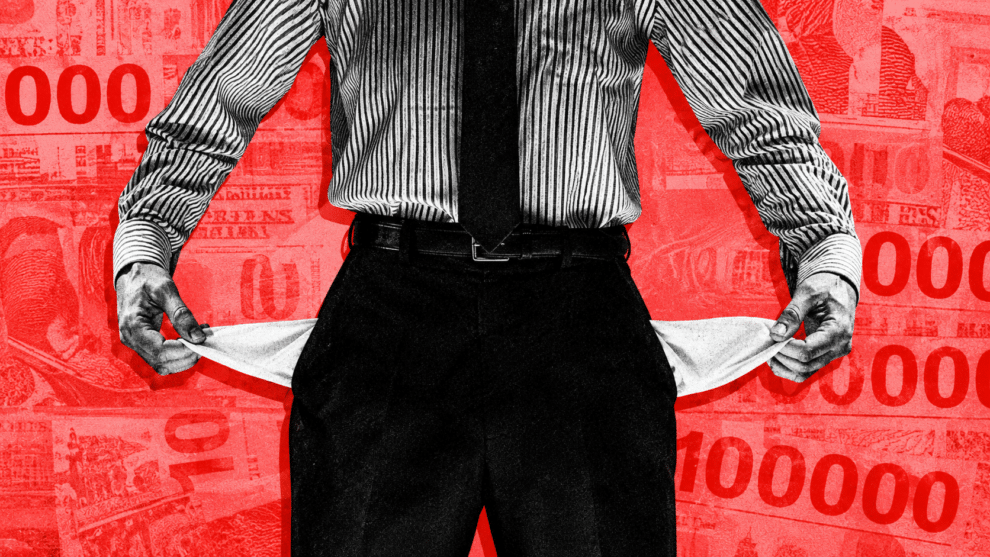
When the currency loses value, the cost is rarely confined to financial markets or government balance sheets. It appears in smaller shopping baskets, postponed purchases, reduced savings and wages that no longer stretch as far.
The headline percentage may describe the economy, but it is the distribution of its consequences that reveals who actually pays.