The geopolitical landscape of South Asia is currently witnessing a significant shift as Russia attempts to navigate the tightening net of Western sanctions by proposing a tripartite financial arrangement involving Bangladesh and India. At the heart of this maneuver is the Indian Rupee (INR), a currency that Moscow hopes will unlock billions of dollars in stalled payments and secure future trade routes. According to The Business Standard, the proposal is part of Moscow’s broader effort to bypass Western financial restrictions.

The Rooppur Paradox: Money in Limbo
The most pressing issue for Moscow is the repayment of loans for the Rooppur Nuclear Power Plant, a $12.65 billion project that is crucial for Bangladesh’s energy security. Since the 2022 invasion of Ukraine and the subsequent exclusion of Russian banks from the SWIFT international payment system, Bangladesh has struggled to remit loan installments.
Currently, approximately $1 billion in payments is parked in a dedicated account at the state-owned Sonali Bank in Dhaka. While the funds have technically been paid by the Bangladeshi government, they remain inaccessible to Russia. Previous attempts to settle these debts in Chinese Yuan were abandoned after banks in both China and Bangladesh feared secondary sanctions from the United States.
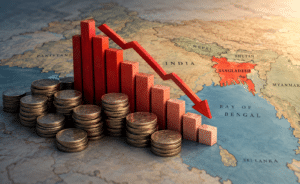
However, Russia’s proposal to use the Indian Rupee is not an isolated event but an extension of an existing trend. Russia and India have already successfully transitioned a portion of their bilateral trade to rupees, particularly in the energy sector. By bringing Bangladesh into this loop, Russia aims to create a regional “rupee zone” that bypasses the US dollar entirely, according to The Business Standard.
Moscow’s Proposal to Dhaka is Comprehensive
Firstly, Moscow has proposed establishing a dedicated bilateral payment mechanism that would allow Bangladesh and Russia to conduct trade directly, reducing their dependence on Western-controlled banking systems.
Secondly, Russia has renewed its request to open a branch of a Russian bank in Dhaka to facilitate these transactions more efficiently, although Bangladesh has so far been cautious about granting approval, as reported by NDTV.
Thirdly, Moscow is seeking to expand bilateral trade by offering Bangladesh discounted urea fertilizer while requesting a formal registry of Bangladeshi textile suppliers, aiming to replace the gap left by Western brands that have exited the Russian market.
Dhaka’s Delicate Balancing Act
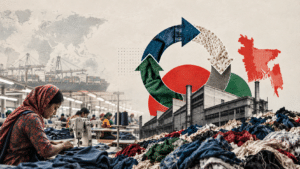
For Bangladesh, the decision is fraught with risk. The United States remains the largest single market for Bangladeshi garment exports, a sector that accounts for over 80% of the country’s foreign exchange earnings. Aligning too closely with a Russian-led financial mechanism could invite scrutiny or sanctions from Washington.
However, Bangladesh also faces internal pressures. The country is a major importer of Russian wheat and fertilizer, and the completion of the Rooppur plant is non-negotiable for its industrial growth. The upcoming Joint Commission meeting in September or October 2026 will be a pivotal moment, as Dhaka weighs Russia’s offer of discounted commodities against the potential diplomatic fallout with the West, as The Business Standard reported.
Toward a Multipolar Financial Order
The push for rupee-denominated trade is a clear signal of the accelerating “de-dollarization” trend in the Global South. If successful, the Russia-Bangladesh-India arrangement could serve as a blueprint for other nations seeking to insulate their economies from Western financial leverage. For now, the world watches as Dhaka prepares to take a position that is as much about foreign policy as it is about currency.