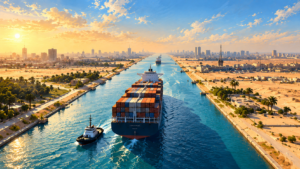
In the shifting tides of regional geopolitics, the concept of the “blue economy” has emerged as a strategic prism through which coastal states can transform maritime endowments into sustainable growth. For the Bay of Bengal littoral nation Bangladesh, this offers a dual advantage, unlocking economic value while elevating its diplomatic voice in the evolving Indo-Pacific order.

Unlocking Potential: What Blue Economy Means for Bangladesh
Bangladesh’s coastline, exclusive economic zone and continental shelf secure her as one of the most maritime-relevant nations in South Asia. According to research, the country’s blue economy sectors including fisheries, maritime transport, offshore energy, tourism and coastal infrastructure hold strong promise if governance, investment and environmental protection align (Islam, J Bangladesh Global Affairs, 2022). Recent scholarship emphasises that success will depend on a “systemic development approach” that links economic growth with social equity and marine conservation.
Diplomacy as the Enabler
Blue economy diplomacy in the Bay of Bengal context involves more than commerce: it is about building institutional cooperation, trust-based networks, and multilateral frameworks. Analysts note that regional architectures such as Bay of Bengal Initiative for Multi‑Sectoral Technical and Economic Cooperation (BIMSTEC) and the Indian Ocean Rim Association (IORA) offer platforms for such cooperation, but face challenges in political will and institutional alignment (Modern Diplomacy, 2023). Bangladesh can carve out a leadership niche by hosting regional dialogue, actively offering maritime infrastructure, and promoting shared coastal research.

Why Bangladesh Can Lead
First, Bangladesh has made the blue economy a declared development priority where the government’s Blue Economy Cell and related policy frameworks reflect that intent. Research-based governance studies recommend creating a central coordinating authority to guide cross-sectoral maritime strategy (2025, Blue Economy Governance in Bangladesh). Second, its geographic position as at the northern reaches of the Bay of Bengal enables it to act as a gateway between South and Southeast Asia. Third, Bangladesh’s planned investments in deep-sea ports, offshore energy and marine conservation could create tangible infrastructure leadership.
Key Challenges and Strategic Enablers
Nevertheless, Bangladesh faces hurdles. Institutional fragmentation remains a barrier: multiple ministries oversee maritime sectors with weak coordination. There is also a need to deepen capacity for advanced marine technology, governance of marine resources and private investment flows. Strategically, Bangladesh must align its development goals with environmental sustainability, avoid resource over-exploitation, and build resilient maritime infrastructure in a climate-vulnerable region.

Forward Strategy: Diplomacy, Investment & Identity
To lead, Bangladesh must weave three threads: diplomatic leadership, investment attraction and narrative building.
Diplomatically, Dhaka should propose a “Bay of Bengal Charter” anchored in sustainable marine governance, joint research, shipping connectivity and disaster-resilient infrastructure. On investment, targeted incentives for offshore wind, aquaculture and port services will attract both regional and global capital. Finally, Dhaka must refine the narrative: from “coastal state” to “maritime partner of the Indo-Pacific”, positioning its blue economy as regional public good rather than zero-sum competition.
A Forward Horizon
In an era of shifting maritime geostrategy, Bangladesh stands at a unique historic juncture. By modernising its governance, deepening regional partnerships and projecting a maritime-first identity, it has the opportunity to lead the Bay of Bengal’s blue economy diplomacy, turning waves into growth, cooperation and leadership.