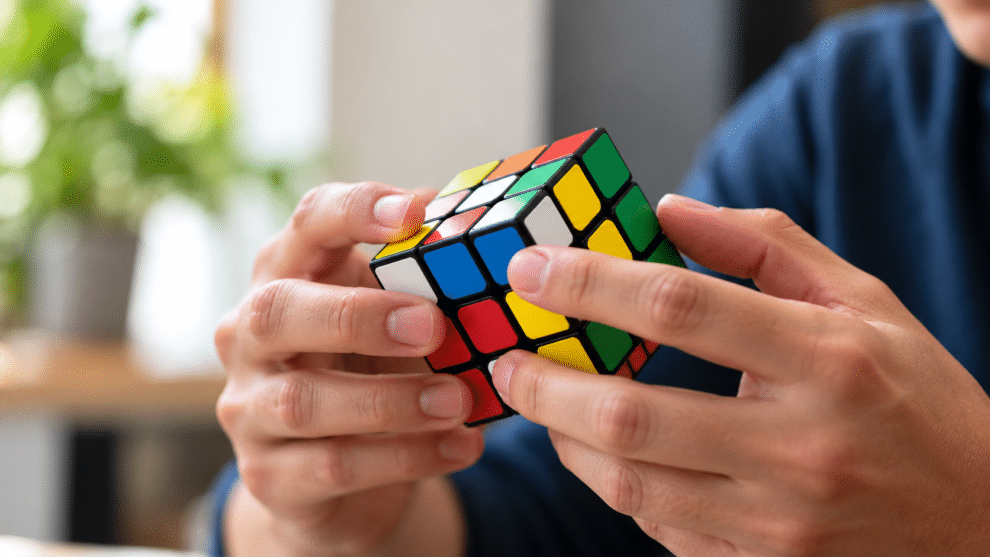
Few objects have crossed generations, cultures, and industries quite like the Rubik’s Cube. At first glance, it appears simple: a colorful cube with rotating sides. Yet behind its playful exterior lies a story of design, mathematics, psychology, and human curiosity.
More than four decades after its invention, the Rubik’s Cube remains one of the most recognizable and best-selling puzzles in history. But its endurance raises an interesting question: why has this small cube remained so compelling in an age dominated by digital entertainment?

The Birth of an Accidental Icon
The Rubik’s Cube was invented in 1974 by Ernő Rubik, a Hungarian architect and professor of design. Interestingly, it was never originally intended to become a toy.

Rubik created the cube as a teaching tool to help his students understand three-dimensional movement and spatial relationships. The challenge was not creating the puzzle itself but designing a structure that could move independently without collapsing. Once the mechanism worked, Rubik scrambled the cube and reportedly realized he could not easily restore it. That moment transformed an educational model into a puzzle.
Initially called the “Magic Cube,” it was later licensed internationally and renamed the Rubik’s Cube in 1980. Its rise was explosive. Within a few years, it had become a global craze, selling millions of units worldwide and embedding itself into popular culture.
Why the Cube Captivated the World
Part of the Rubik’s Cube’s appeal lies in its paradoxical simplicity. The rules are easy to understand, yet the challenge is remarkably deep. A standard cube has more than 43 quintillion possible combinations, but only one correct solution.
This balance between chaos and order fascinates the human mind. Solving the cube requires logic, pattern recognition, memory, patience, and adaptability. For some, it becomes a mathematical exercise; for others, a form of meditation.
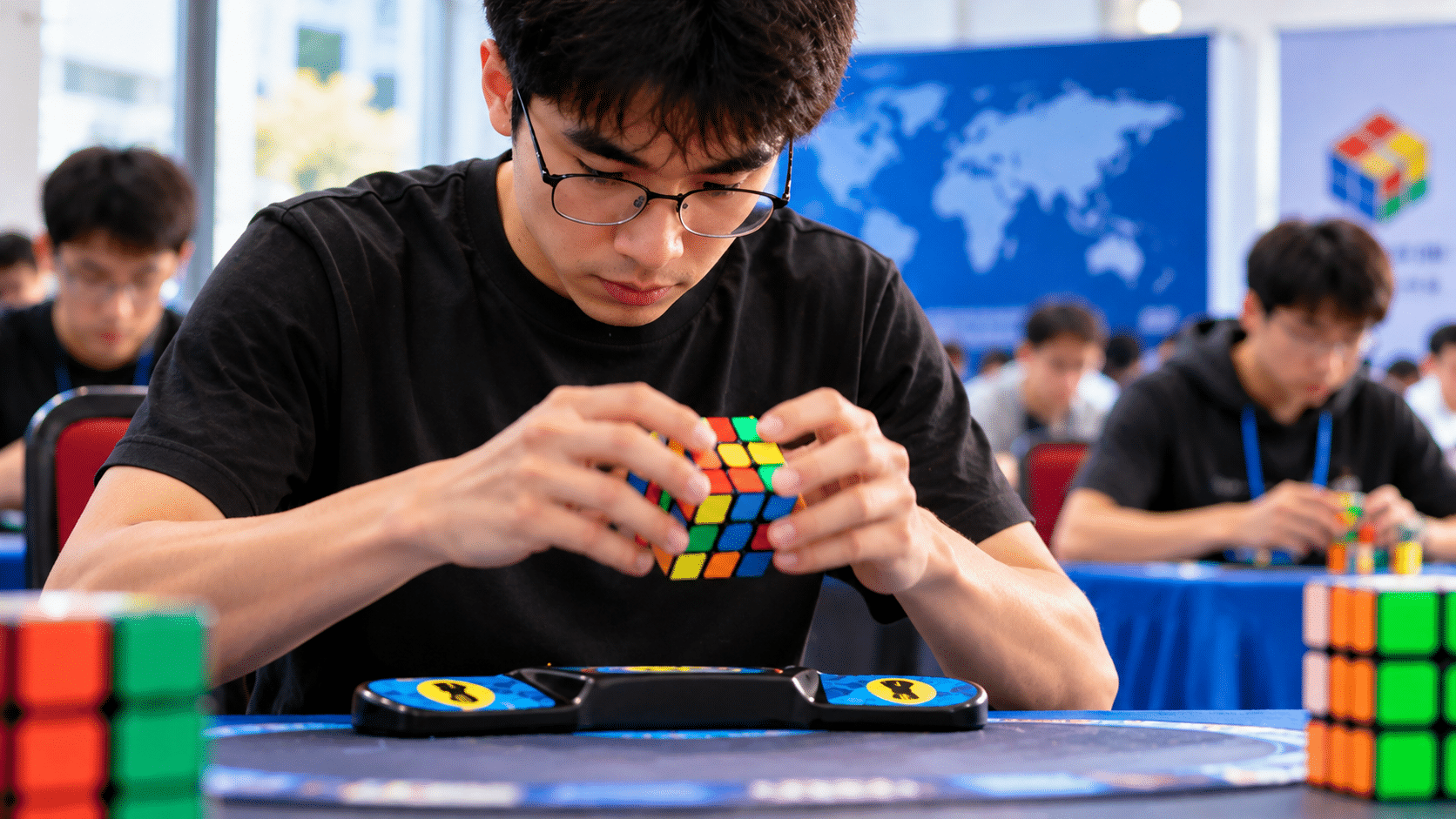
Over time, the cube evolved beyond a toy into a competitive discipline. Speedcubing competitions now attract participants from around the world, with elite solvers completing the puzzle in mere seconds. Entire communities, algorithms, and techniques have emerged around mastering the cube.
Can a Puzzle Relieve Stress?
Surprisingly, many enthusiasts describe the Rubik’s Cube as calming. While it may appear mentally demanding, repetitive movement and focused problem-solving can create a sense of concentration that temporarily quiets external distractions.
Psychologists often associate such activities with “flow states”; periods of deep mental engagement where attention becomes fully absorbed in a task. Similar to chess, sketching, or knitting, the cube offers structured focus in an otherwise overstimulated world.
There is also satisfaction in progression. Unlike many digital experiences designed for instant gratification, the Rubik’s Cube rewards patience. Every solved layer feels earned.
Research has further suggested that puzzle-solving activities may help strengthen memory, spatial awareness, and cognitive flexibility. While the cube is not a substitute for formal mental training, it undeniably exercises the brain in ways passive entertainment often does not.
A Timeless Object in a Digital Age
What makes the Rubik’s Cube remarkable is not merely its difficulty but its timelessness. In an era of rapidly changing technology, it remains entirely physical, tactile, and screen-free.
Children approach it with curiosity. Adults revisit it with nostalgia. Professionals use it as a desk companion; competitors treat it as a sport. Few objects manage to exist simultaneously as a toy, educational tool, cultural icon, and mental exercise.
Perhaps that is why the Rubik’s Cube continues to endure. It reflects something deeply human. The desire to solve, to understand, and to bring order to complexity.
And sometimes, all of that can fit in the palm of your hand.