1. To start personally—where were you born and brought up, how was your academic journey, and what first pulled you toward public life and politics in Bangladesh?
I spent the first ten years of my life in Chittagong before my family moved to Dhaka in the ’90s. I completed my schooling at Scholastica, and in 2000, I left for the United States to study at Macalester College. After graduating in 2004, I returned home and went straight into business.
I began with a small buying house that year. By 2007, I had established my own garment factory. The ready-made garment industry wasn’t something I had strategically planned—it evolved organically. Along the way, I also operated a small packaging unit that complemented the garment accessories side of the business. Over time, I naturally became part of the RMG trade, and it has remained my primary profession ever since.
My journey into politics was far more gradual. Around 2011, I began writing opinion pieces for publications like Dhaka Tribune, New Age, and bdnews24.com. Writing gave me space to articulate my thoughts on Bangladesh’s shifting political landscape. In the lead-up to the 2014 election, it became increasingly clear to me that the election would be one-sided, lacking a genuine public mandate. That deeply concerned me.
Before the election, I wrote a satirical piece in New Age titled An Open Letter to a Budding Autocrat, addressed to Sheikh Hasina. The backlash that followed made me realize how restricted the space for free expression had become. It reinforced my fear that we were heading toward authoritarianism. The opposition had already been marginalized, and the environment felt increasingly suffocating.
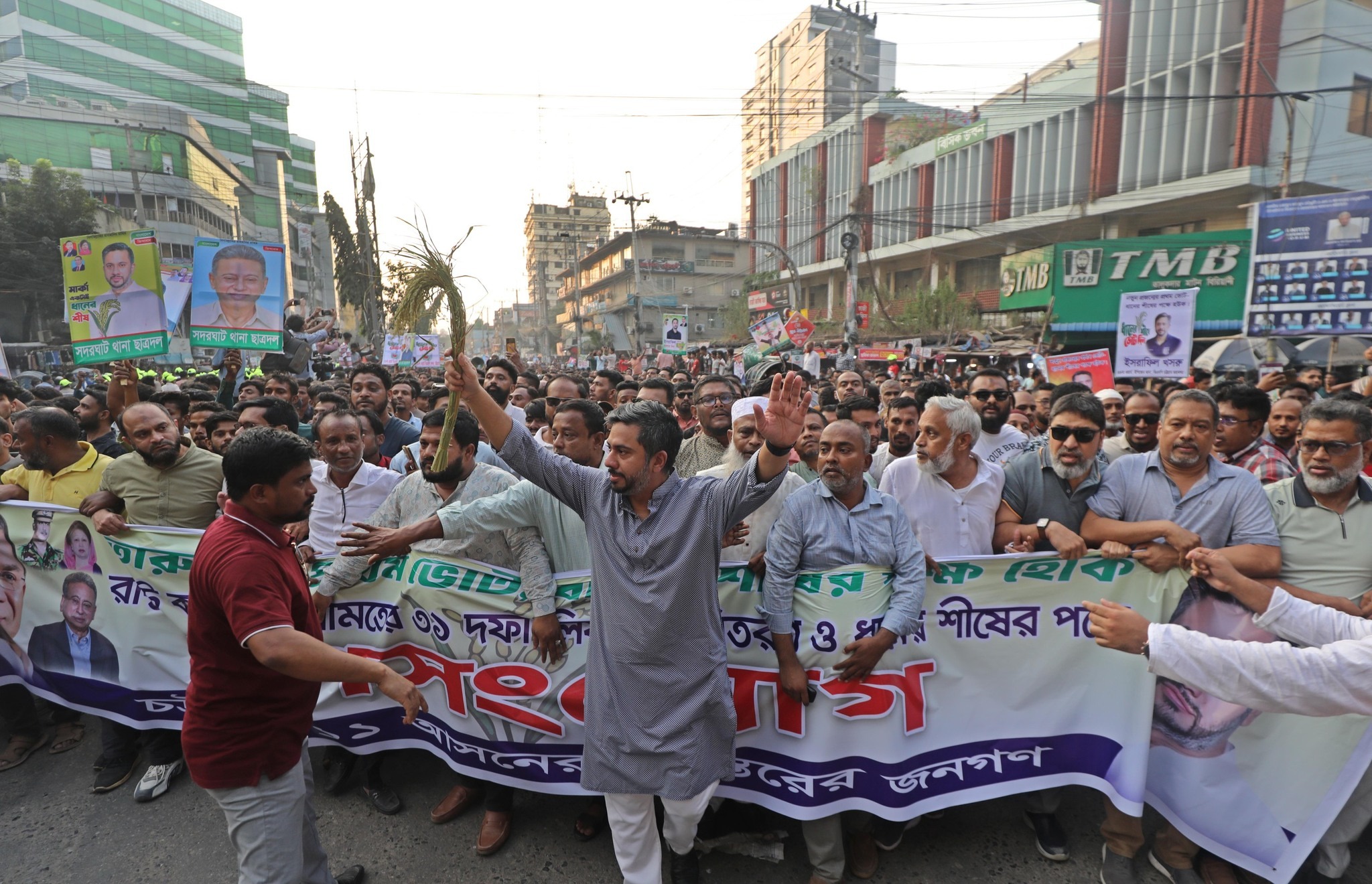
Given my family’s political background—my father being actively involved—I felt a growing sense of responsibility. I came to believe that meaningful change required direct engagement. So I returned to my roots in Chittagong and began grassroots work. After the 2014 election, organizing even small political programs became difficult. There were police obstructions, attacks, and false cases. I started by arranging small local gatherings to keep party workers motivated, provide legal support, and stand beside them in difficult times. Gradually, I became fully immersed in grassroots politics.
At the same time, I continued writing until around 2018 or 2019, when rising commitments in both business and politics demanded my full attention. Balancing my factory, constituency work, and policy responsibilities became a daily challenge.
Even before formally entering active politics, I had been involved in policy work for the BNP for nearly a decade, largely through supporting my father. I contributed to discussions on foreign policy, trade, and investment—areas I remain engaged in today as a member of the party’s Foreign Affairs Committee.
My entry into politics wasn’t pre-planned. It grew from a sense of urgency—the belief that if you want change, you have to step in and be part of it. What began as small steps in my locality gradually became a full political journey.

2. People see you as part of a political legacy through Amir Khasru Mahmud Chowdhury, but also as someone building an independent identity. What are the two beliefs you hold that are distinctly “yours,” even if they are unpopular or difficult?
Politics is a long-term journey, and if I want to sustain myself in it, there are two things that have no substitute.
First is hard work. My biggest strength is my connection with grassroots workers, and that requires constant time and commitment. I need to be present, to support them, and to stay connected. Without that effort, it’s impossible to survive in politics.
Second is integrity. In the long run, integrity matters more than anything else. You can focus on PR or social media and try to create an image, but if it isn’t real, it won’t last. People should know you through your work.
Alongside this, I also try to contribute intellectually by building a strong work portfolio. These values—hard work and integrity—are what I want to carry forward.
3. When citizens say, “Politics doesn’t change my daily life,” what do you think is the single biggest gap between political conversation and people’s real pain points (prices, jobs, security, services)—and how would you personally close that gap?
For any political party, the most important thing is to have strong policies and to invest in them for the future. Political rhetoric will always exist—debates, arguments, and personal attacks are part of politics. But at the end of the day, real politics is about policies. The ultimate goal of every party is to form a government and serve the people, and to do that, you need clear vision and sound planning. Developing good policies is crucial, but implementing them properly is just as important. A long-term, forward-looking approach is essential.
I believe this mindset is gradually taking root. In the BNP, we are now focusing on “The Plan” laid out by Prime Minister Tarique Rahman. It is a comprehensive policy framework covering every major sector—how we develop industries, support businesses, create opportunities, and ensure that growth reaches everyone. At its core, it asks a simple question: how do we improve people’s quality of life and make sure no one is left behind?
Bangladesh was once on a strong growth trajectory, but that momentum has been seriously damaged over the last fifteen years. We need to get back on track. This time, economic progress must benefit every class and profession. We have to uplift everyone together. At the same time, our political and democratic institutions have weakened and must be rebuilt.
If we focus on strong policies and their proper implementation, people will feel the difference in their daily lives. We must move away from empty rhetoric. In the BNP, we understand that policies are the way forward. Prime Minister Tarique Rahman’s vision follows the path once shown by President Ziaur Rahman—clear direction, people-centered policies, and inclusive development. That approach helped Bangladesh progress before, and it can guide us again toward a future where people’s voices are heard and growth benefits all.
4. Inside the Bangladesh Nationalist Party, what do you believe a modern political culture should look like in 2026—in terms of internal discipline, candidate quality, and public behavior—so politics earns respect again?
Political culture doesn’t change overnight. What really matters is whether we are moving in the right direction—and I believe we are.
You can see this in several ways. There is a growing focus on policies and a more research-based approach to problem-solving. Instead of jumping to conclusions, we are trying to understand issues first and then work toward practical solutions. That mindset is gradually taking root.
Another important shift is our message of unity. The BNP consistently emphasizes that progress is only possible if we move forward together. All stakeholders must be included. In our policy discussions, we focus on inclusive development—bringing every sector of society along. That message is central to our politics.
A very positive development is the increasing involvement of young people. After August 5, it became clear that young citizens are more politically aware and engaged. Now, our responsibility is to give them real space in politics, and we are doing that. As young leaders step forward, political culture is slowly evolving. We are moving toward a more knowledge-based society, and the BNP is actively promoting that vision.
If you listen to Prime Minister Tarique Rahman’s speeches, he consistently talks about the future and collective progress. Our leaders at every level are aligning with that vision. Leadership sets the direction. Begum Khaleda Zia showed unwavering principles, and that inspired the grassroots. Today, Prime Minister Tarique Rahman’s message of positive, forward-looking politics is spreading in the same way.
That is why I believe we are moving toward a new Bangladesh.
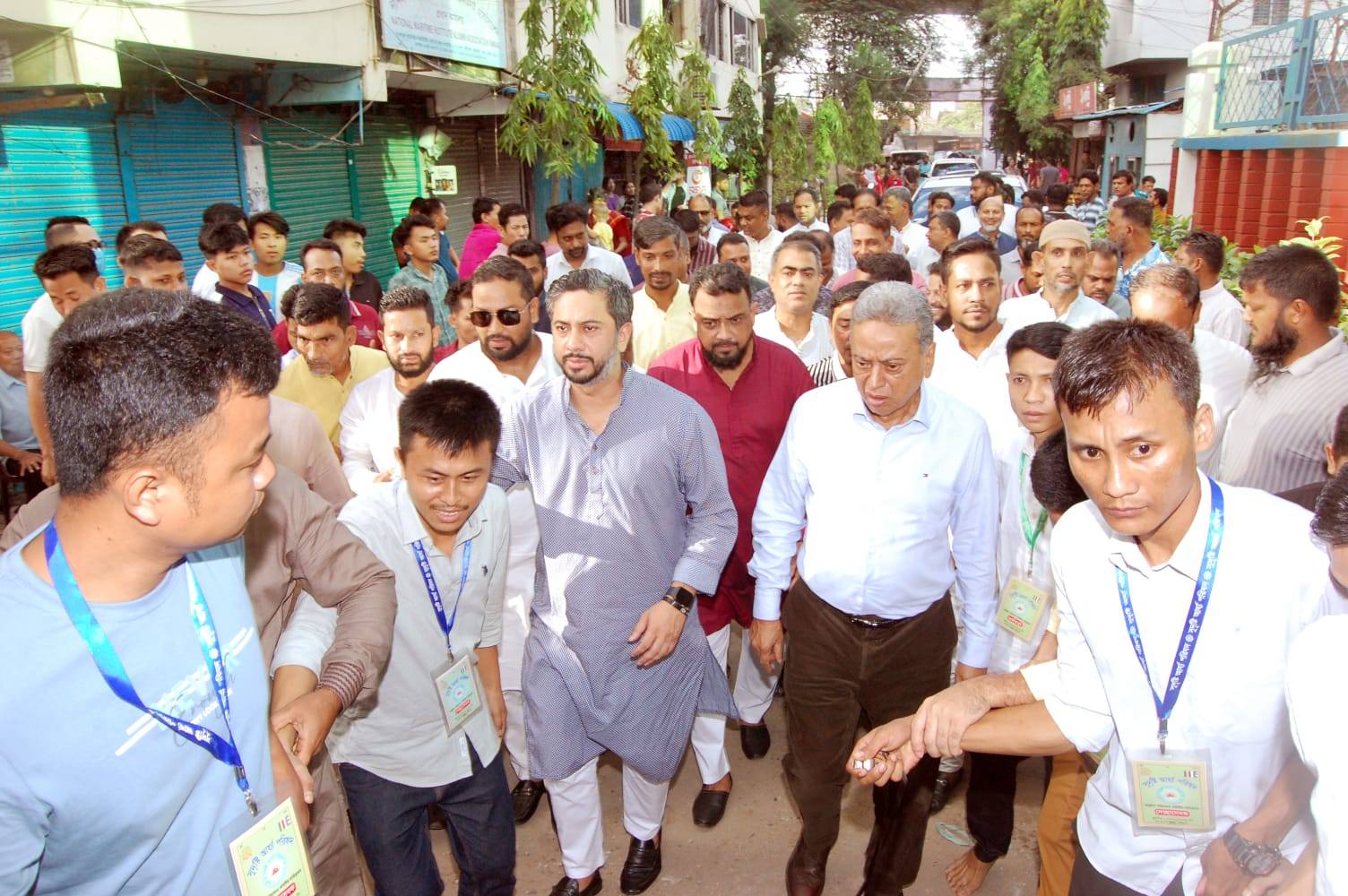
5. Bangladeshis want reform, but they also fear instability. What are three reforms that you believe can be delivered in the first 12–18 months without creating chaos—reforms that ordinary people would actually feel (not just “policy talk”)?
First and foremost, the economy has to be stabilized. Inflation must be brought down to a tolerable level, and people need to feel that their lives are becoming manageable again. Right now, many feel their savings and hard work are disappearing. Any government’s first responsibility is to restore economic stability. That alone will give people some immediate relief.
Second is public safety and law and order. This has to be addressed urgently. People should feel secure in their own neighborhoods and communities. No one should live in fear or anxiety. Ensuring the safety of every citizen must be a top priority. Restoring law and order to an acceptable standard has to happen right away.
Third is job creation, which is one of Bangladesh’s biggest challenges today. The BNP has consistently said that employment generation is a top priority. To create jobs, we need investment. We must move toward an investment-driven economy. Over the last fifteen years, the economy suffered due to excessive borrowing and money printing, which fueled inflation and increased public debt. Sustainable development requires long-term investment. When investment grows, it creates a multiplier effect—new industries emerge, and employment expands.
But investment is not only about factories and infrastructure. We also need strong investment in training and skills development. Our biggest asset is our people. If we improve their skills and capabilities, we unlock enormous potential.
We also have to look beyond traditional sectors like garments, remittances, and manufacturing. A large service economy is emerging—content creators, freelancers, and digital professionals. This creative industry has huge potential, but it needs proper recognition and policy support. Many young people are already working in these fields without formal structures.
At the same time, sports offers major opportunities. Many young boys and girls want to pursue professional sports, and we must create pathways for them to earn livelihoods through it.
Our approach to job creation must be comprehensive—combining investment, skills, creativity, and new industries—to fully harness the talent of our people.
6. You’re active in Chattogram. If you had one opportunity to propose a “Chattogram-first” national priority—something Dhaka often ignores—what would it be (port / traffic / industry / youth skills / safety), and what would success look like?
We often call Chittagong the business capital of Bangladesh, but nothing substantial was ever done to make it one. That’s why Prime Minister Tarique Rahman’s announcement that Chittagong will be developed into a proper business capital is so encouraging. It gives us something real to work toward.
Making Chittagong a true business capital isn’t just about saying the words—it requires actual support and investment. And the potential is enormous. Chittagong Port is here. Major industrial areas are here. The RMG sector, ready-made garments, started right here in Chittagong. This is where it all began. If we can truly transform Chittagong into a business capital and a logistical hub for Bangladesh, it would be the best thing for the region and for the country.
If we capitalize on Chittagong optimally, it has so much to offer. The port alone—especially in our electoral area—holds huge potential. The industries around it are vast: garments, steel mills, and other manufacturing. Everything converges here. So my priority is clear: make Chittagong a proper business capital and logistical hub. Not just in rhetoric, but through the right policies and investments. That’s what success would look like.
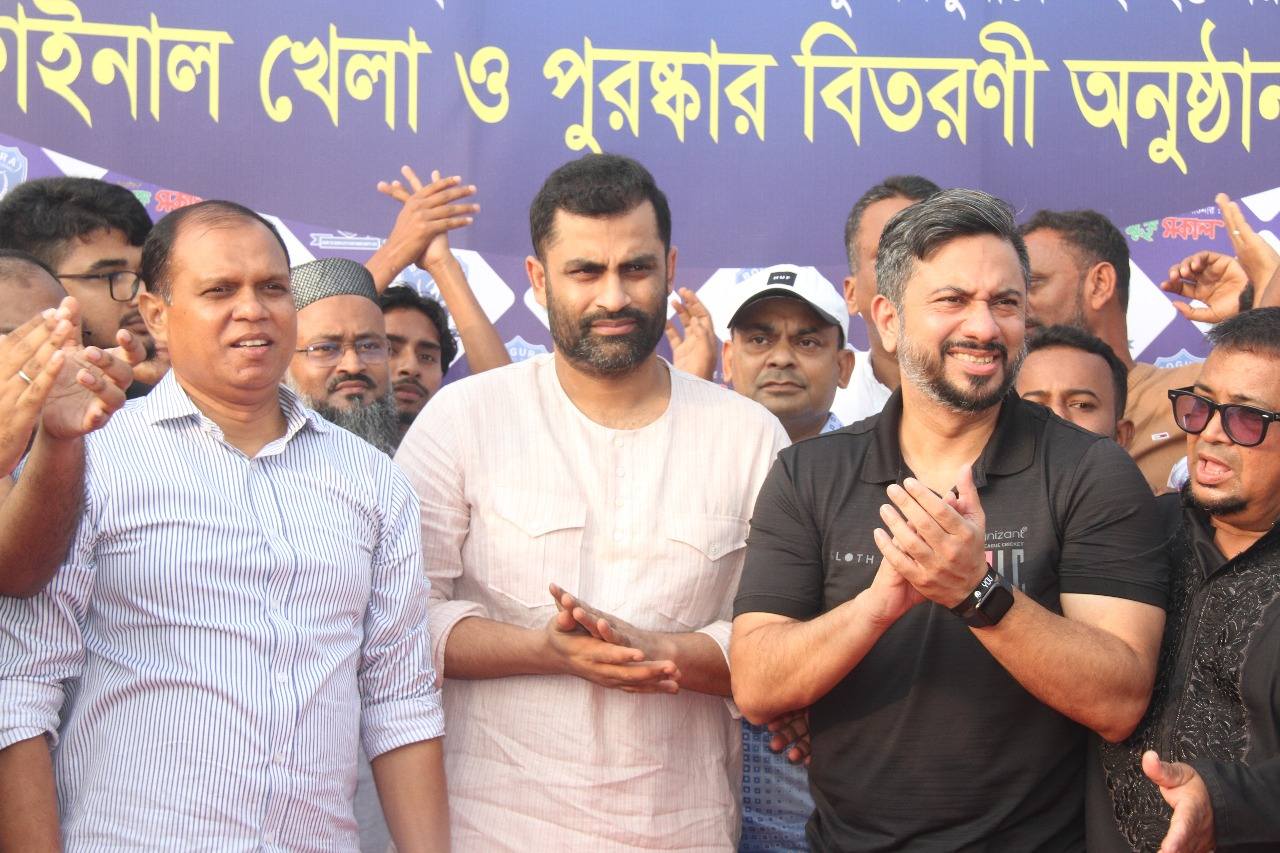
7. Your role in international affairs suggests you think beyond borders. In today’s world—trade shocks, sanctions, regional rivalry—what does a smart, dignified foreign policy look like for Bangladesh that protects national interest without sounding either dependent or aggressive?
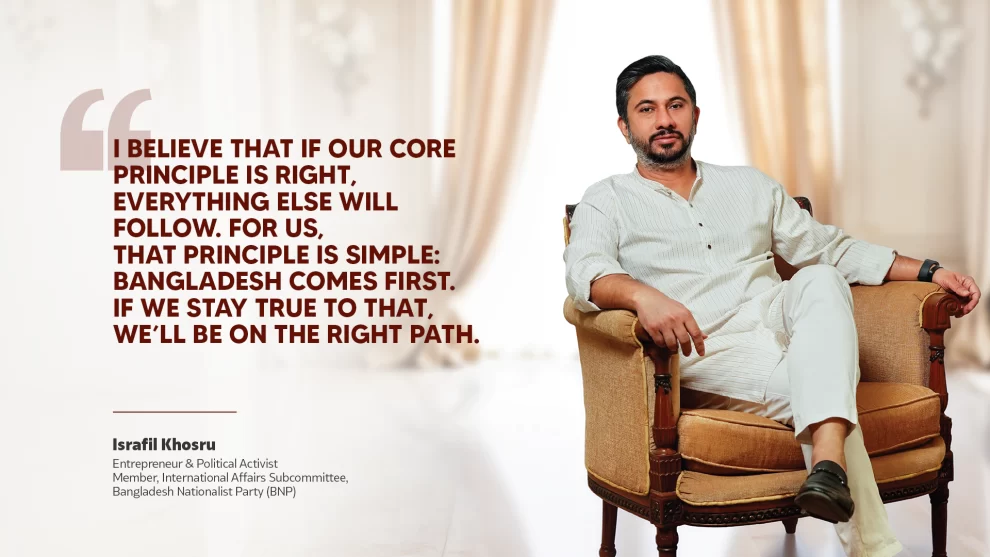
I believe that if our core principle is right, everything else will follow. For us, that principle is simple: Bangladesh comes first. If we stay true to that, we’ll be on the right path.
Every bilateral and multilateral relationship should be based on equality, fairness, and mutual respect—free from interference or intervention. That’s what “Bangladesh First” really means. We will engage with everyone, whether in diplomacy or trade, but always by putting our national interest and comparative advantage first.
Our relationships with China, India, the US, or any other country must be based on reciprocity. That is crucial.
At the same time, we must strengthen our own capacity. Our diplomatic teams need to be well-prepared, capable, and confident. When we build that internal strength, no one can take advantage of us, and Bangladesh will be treated as an equal partner.
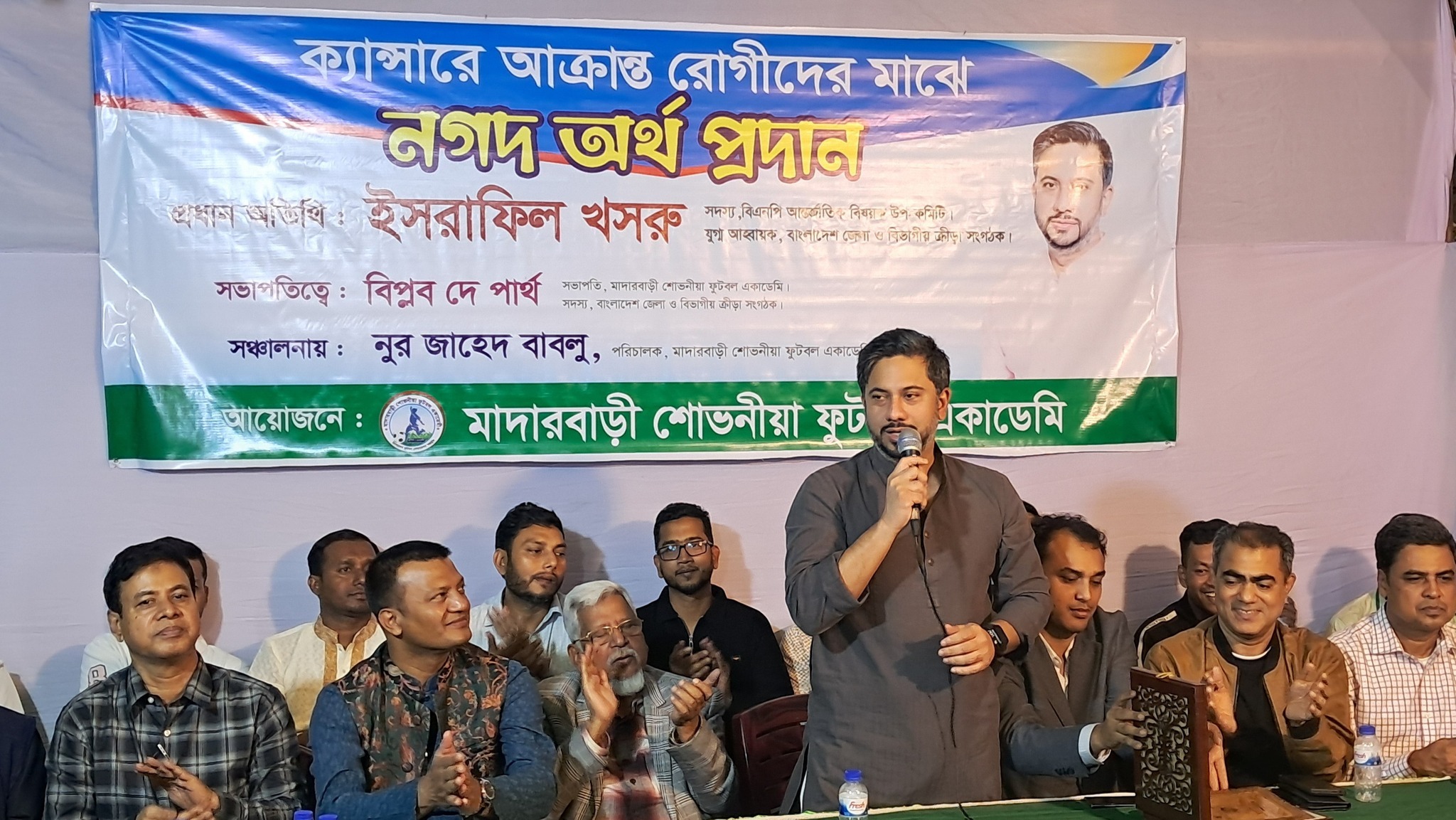
8. Youth are energized but also cynical. If you had to win over a room of 20-year-olds who think all parties are the same, what would you say—and what one concrete youth-focused outcome would you commit to pushing for (skills, jobs, entrepreneurship, digital, mental health, or civic trust)?
The biggest concern for young people today is jobs. I’ve mentioned this before, and it remains one of our top priorities. That’s why we’ve clearly stated our goal: to create one crore—ten million—jobs within eighteen months. It’s a specific and ambitious target.
But job creation isn’t just about numbers. It’s also about skills, training, and developing new sectors. Take agriculture, for example. It is still the largest employer in Bangladesh, with about 46 percent of the workforce involved. Yet the sector remains largely informal. We need to formalize it, recognize it properly, and provide strong policy support. Only then can it generate sustainable and meaningful employment.
Employment is the youth’s biggest concern, and it is also central to BNP’s agenda. Alongside the job target, we are working on a dedicated Youth Development Policy to address young people’s needs and challenges directly. The youth are at the core of our thinking.
These are not just slogans. We are proposing concrete policies. At present, the BNP is the only party offering detailed plans for every major sector, because we have been working on this for years. Even during difficult times, we continued developing policy frameworks.
Our 31-point vision, announced in July 2023, was part of that effort. It provided direction when the country needed it most. Since then, we’ve expanded on it—outlining a vision for a one-trillion-dollar economy and introducing policies on sports and women’s empowerment.
This work is ongoing, because we believe strong policies are the only path to real and lasting change.
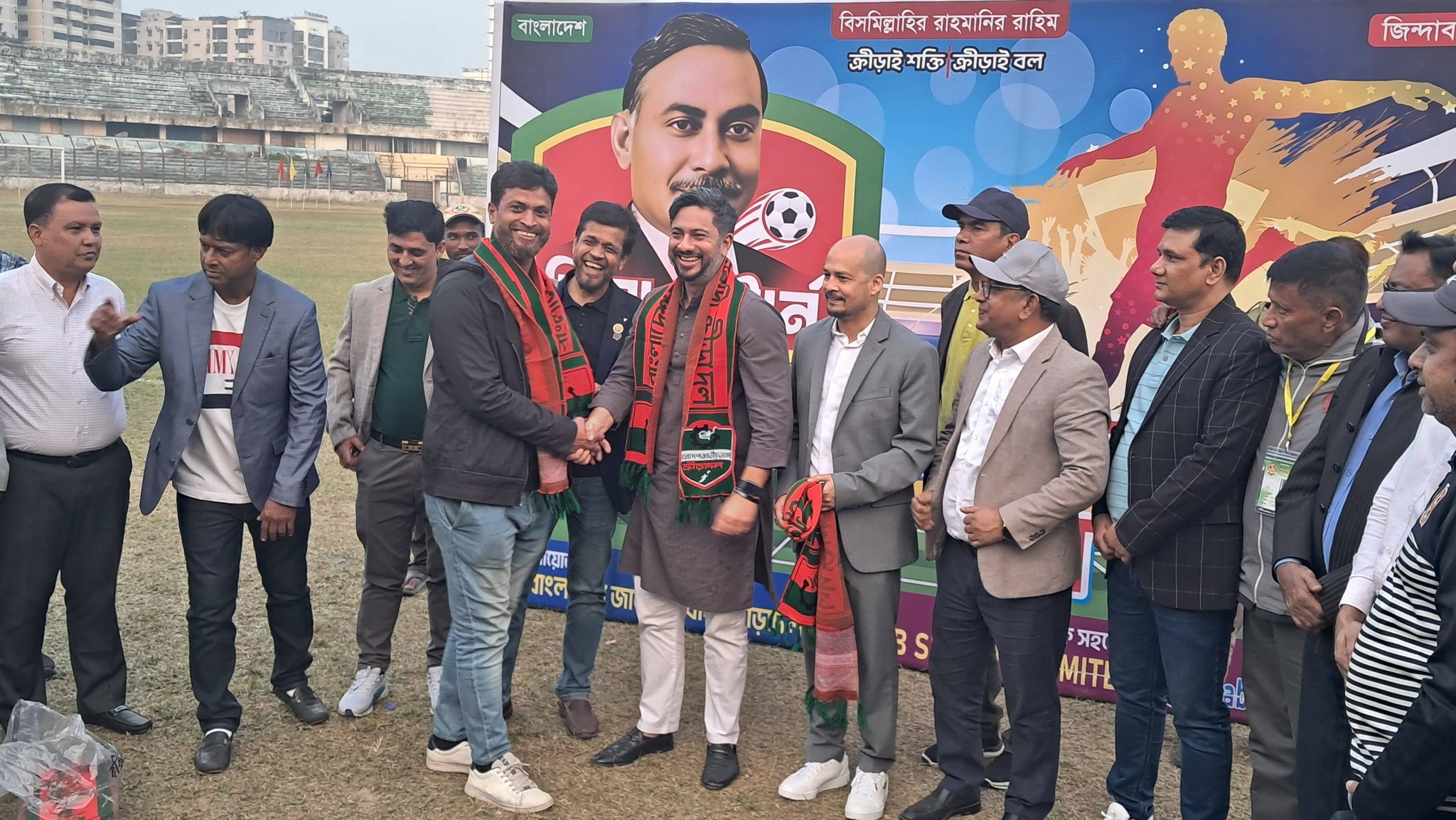
9. Finally, when you picture your public life 10–15 years from now, what would you want people to say about you—not as a politician, but as a human being who tried to serve with principle?
Honestly, I see myself as quite insignificant as an individual. What matters most to me is where Bangladesh stands ten or fifteen years from now. Of course, on a personal level, I hope to be happy, content, without regrets, and still able to work. But my bigger dream has always been about the country.
As a politician, your aspirations can’t be limited to yourself. I want to see Bangladesh in a position of dignity—respected in global politics and seen as a model in different ways. Economically, we need to return to the growth path we were once on, which was disrupted over the last fifteen years. My vision is of a unified, economically strong country where every citizen has equal opportunity.
We often talk about political democracy, but economic democracy is just as important. The economy must be open to everyone, without discrimination based on class, group, or gender. People should succeed based on merit. We must not allow an oligarchic system, where wealth is concentrated in a few hands, to take root again.
But none of this is possible without political democracy. That is the foundation. In the next fifteen years, I hope to see a Bangladesh that is democratic, economically inclusive, vibrant, and united.
10. Finally, stepping away from politics for a moment—when you’re navigating such a busy schedule, what do you turn to for happiness? And if your life had a soundtrack, what would the background music be?
With my schedule, I don’t get much free time. When I do, I try to read—though I wouldn’t call myself a serious reader. Most of what I read is related to global politics and foreign affairs. I like to understand what’s shaping the world and where things are heading.
I’m also a big sports enthusiast and a huge fan of Liverpool Football Club. Watching matches really helps me relax and unwind whenever I get the chance.
But honestly, the most calming thing for me is spending time with my family—something I don’t get to do nearly enough. Right now, for example, I’m in Chittagong because of the election and haven’t seen them in a while. I miss them. My mother, my wife, and my children often get the least time, and that hurts. So whenever I get a moment, I try to make it quality time.
I believe work-life balance is crucial, and I’m still learning how to manage it.
If my life had background music, it would be Eye of the Tiger. It reflects my belief in staying motivated, pushing through obstacles, and never giving up.