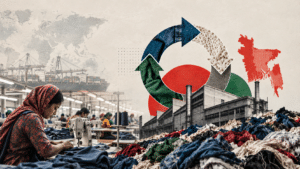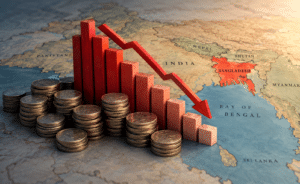
Carbon markets are no longer a niche climate concept. They are increasingly becoming part of how countries and companies think about finance, trade, and long-term competitiveness. A carbon credit, at its simplest, represents one tonne of carbon dioxide reduced or removed. These credits can then be traded, creating a financial value for climate action. The scale of the market is growing: the World Bank’s State and Trends of Carbon Pricing 2025 notes that carbon pricing instruments now cover around 28 percent of global emissions. That alone signals how quickly climate policy is becoming economic policy.
For Bangladesh, the relevance is immediate. It is among the countries most exposed to climate vulnerability, yet its contribution to global emissions remains very small. That creates a compelling possibility: could carbon trading become not just an environmental tool, but a new avenue for finance, investment, and global positioning?


Bangladesh Has Entered the Space, But Modestly
Bangladesh is not starting from zero. According to reporting by The Business Standard, the country has sold about 2.53 million carbon credits since 2006, earning roughly $16.25 million, largely from projects such as solar home systems and improved cookstoves. That shows the country has already participated in the market in a practical way.
Still, that participation remains limited. Compared to larger Asian economies, Bangladesh’s carbon market footprint is small, and its engagement has so far been more proof of concept than major economic strategy. The challenge now is not whether the country can generate credits, but whether it can do so at scale and with credibility.
Where the Untapped Promise Lies
The real attraction lies in Bangladesh’s diversity of opportunities. Forestry, mangrove protection, renewable energy, waste management, and climate-smart agriculture all offer potential pathways for generating carbon credits. This is why policy voices in Bangladesh, including the Centre for Policy Dialogue and commentary in The Financial Express, have increasingly focused on carbon markets as a serious financing opportunity rather than just a theoretical one.
There is also growing optimism around scale. At a COP29-side discussion cited by The Financial Express, a World Bank carbon markets specialist said Bangladesh could potentially earn around $1 billion a year from the global carbon market if it builds the necessary capacity and framework. That figure should be read as potential, not certainty—but it is large enough to demand serious attention.

The Illusion Begins Where Governance Is Weak
This is where caution is essential. Carbon markets depend on trust. If credits are poorly measured, weakly verified, or poorly governed, they lose value. Bangladesh still needs stronger institutional architecture: a robust registry, clear rules, credible monitoring, and technical capacity. The recently published Bangladesh Carbon Market Framework by the Department of Environment is an important step in that direction, especially with its emphasis on a National Carbon Registry and safeguards against double counting. But a framework alone is not enough; implementation will determine credibility.
There is also a strategic question. If Bangladesh rushes to sell carbon credits without long-term planning, it could reduce flexibility for meeting its own future climate obligations. So the issue is not simply how much can be sold, but what should be sold, and under what terms.
Opportunity, If Built Carefully
So, is it an opportunity or an illusion? In truth, it is both a promise and a test. The opportunity is real: Bangladesh has climate assets, growing policy attention, and a world increasingly willing to put a price on carbon. But the illusion begins when potential is mistaken for readiness.
For Bangladesh, carbon markets can become meaningful only if governance, transparency, and strategy move as fast as ambition. If that happens, carbon trading could evolve into a serious pillar of the country’s climate economy. If not, it will remain an attractive idea—discussed often, but realized only in fragments.