The British Council hosted the opening of ‘Sundarbans Across Borders: The Spirit of Cultural Resilience’, alongside the exhibition The Hive and the Hymn, at the Fuller Road Auditorium. The programme was led by EUNIC Cluster Bangladesh and the European Union Delegation to Bangladesh, in collaboration with HERITENCE DoA BUET, Riverine People, and Team Platform.

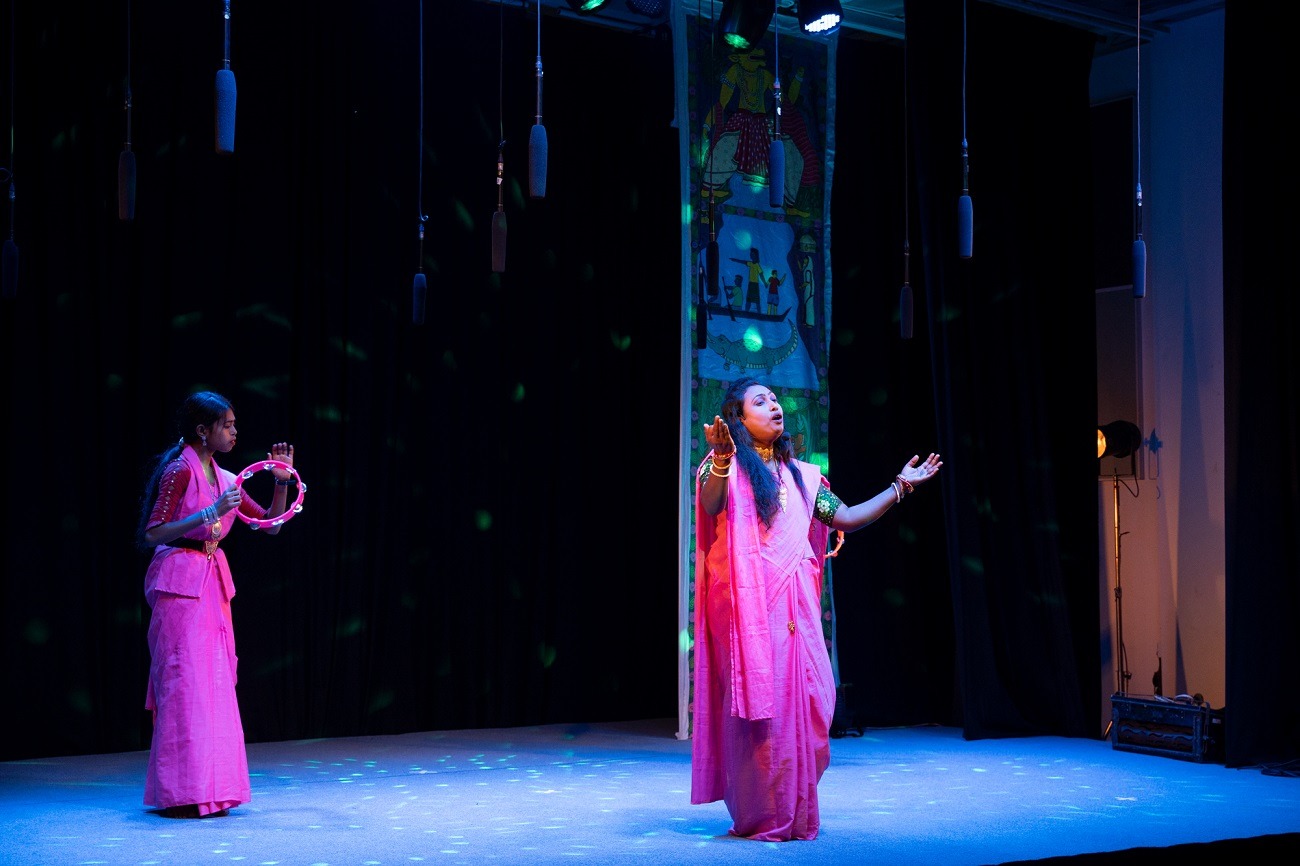
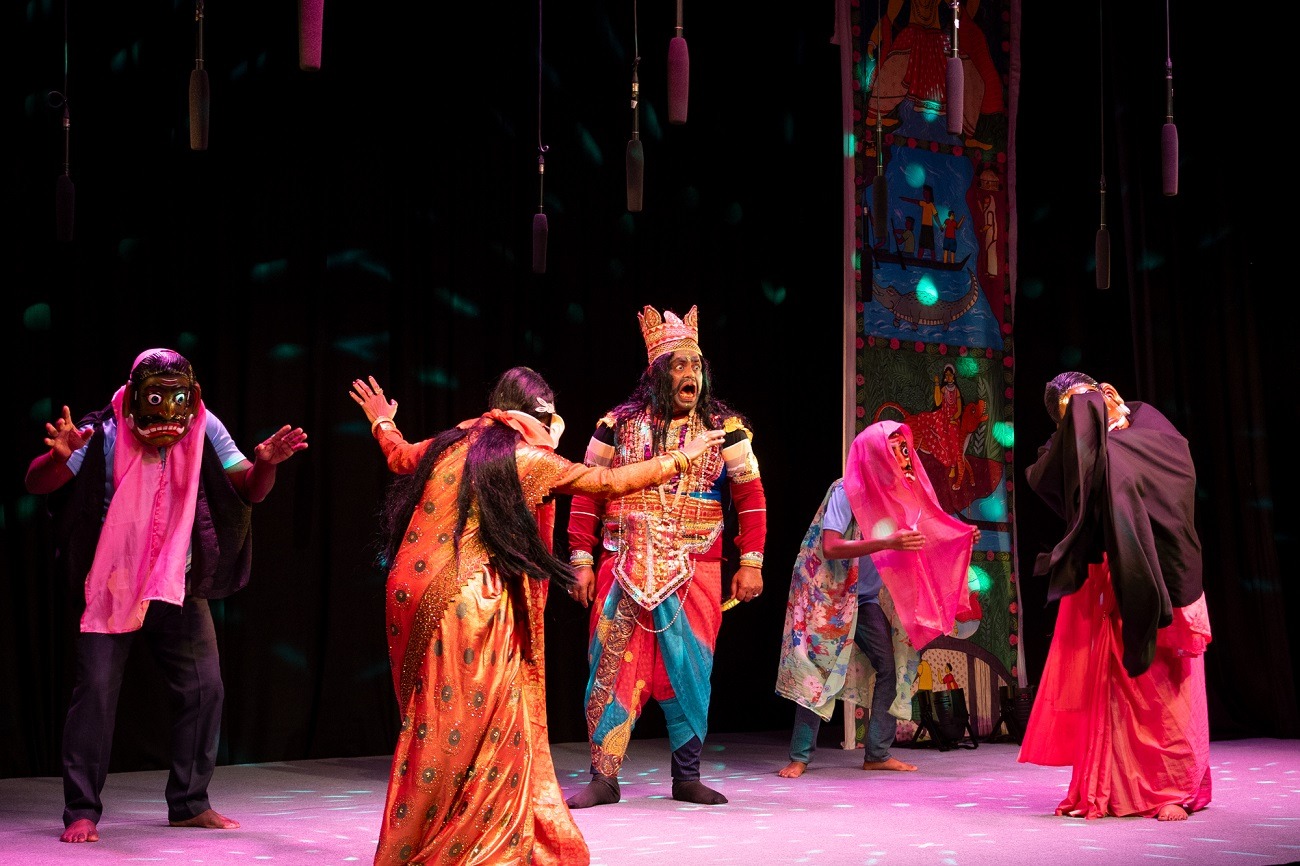
The initiative highlighted the shared ecological heritage, traditional knowledge, and community resilience of the Sundarbans—an interconnected ecosystem spanning Bangladesh and India. Through interdisciplinary exhibitions, research presentations, documentary screenings, and a live performance of Dukhe’r Bonobash by SagorNodi Natyasangstha, the programme brought forward the lived realities of forest-dependent communities.
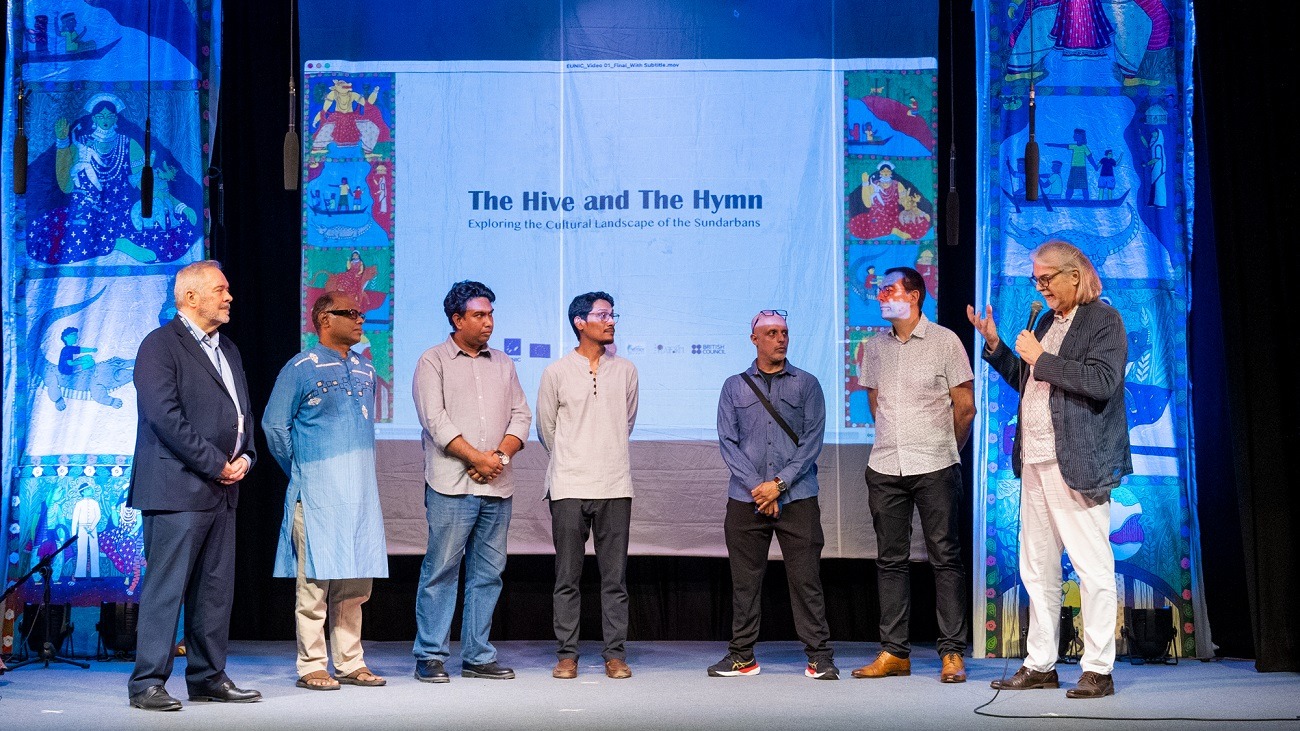
Reflecting on the initiative, Frank Werner, Director of Goethe-Institut Bangladesh, emphasized the importance of cross-border cultural dialogue in addressing shared environmental challenges. He noted that such platforms help audiences understand how culture, ecology, and community life are deeply interconnected, encouraging more responsible and empathetic engagement with heritage landscapes.
Stephen Forbes, Country Director of the British Council, highlighted the role of cultural programmes in strengthening regional cooperation. He remarked that the exhibition created meaningful space for public reflection on climate resilience, community knowledge, and sustainable futures, while fostering dialogue between researchers, artists, and citizens.
Sharing his perspective, François Chambraud, Director of Alliance Française de Dhaka, underlined the power of culture in shaping social awareness. He observed that such initiatives deepen public appreciation for marginalized voices and reinforce the role of arts in building environmental and social responsibility.
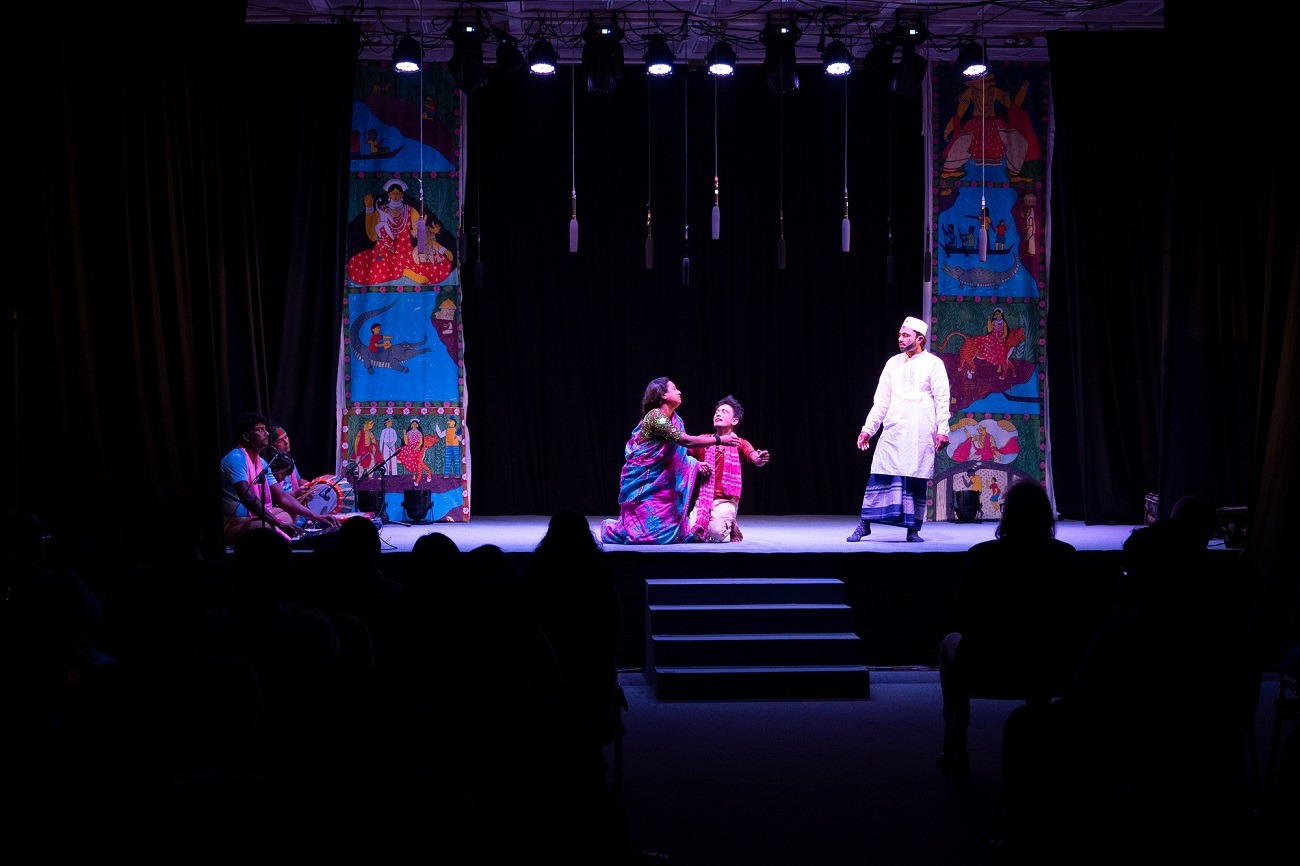
Towheed Feroze, Press & Information Adviser at the Delegation of the European Union to Bangladesh, explained that the project aims to highlight the culture, beliefs, and daily realities of communities living around the Sundarbans. He noted that the theatrical presentation, centered on Bonbibi, reflects how myths and rituals shape livelihoods and survival in the forest. Emphasizing the need for wider outreach, he suggested publishing and distributing related books and albums, and showcasing such performances at national cultural venues. He added that public understanding of the Sundarbans remains limited, often focused only on wildlife, while the lives and struggles of its people remain largely unknown—making initiatives like this essential for building deeper awareness.
Open to the public from 23–26 February, the exhibition invites visitors to explore the Sundarbans not only as a natural treasure, but also as a living cultural landscape shaped by generations of human experience. Through research, storytelling, and artistic expression, Sundarbans Across Borders demonstrates how cultural resilience remains central to sustainable development and regional cooperation.