- Briefly describe your childhood and your background and how you got involved in your family business at Interport Group?
I have been connected to the blue ocean from my childhood. I had the rare privilege of sailing on merchant ships across Asia and the South Pacific with my father, Captain Mohiuddin Abdul Kadir. He was a Master Mariner who later founded Interport Group, and from an early age I absorbed his passion for the maritime world and his unwavering values. Those voyages with him are some of my fondest memories, they planted the seeds of my own fascination with shipping and taught me the importance of integrity and excellence.
Though I earned a degree in Electronics & Communications Engineering on a full scholarship at BRAC University, the call of the sea never left me. I had an offer to pursue a master’s in the UK, but chose to stay in Bangladesh to join our family business, it felt more meaningful to learn directly from my father and carry forward the legacy he built. So in 2010, right after university, I started at Interport Group as a junior executive in our P&I division.
Coming from an engineering background, I knew I needed to build my maritime expertise. Over the next several years, I undertook professional training in marine insurance and loss prevention with leading P&I clubs in London, Newcastle, and Oslo. I also pursued a law degree from the University of London to deepen my understanding of maritime law and claims. Along the way, I earned Fellowship of the Chartered Institute of Logistics & Transport (CILT) and helped establish its Young Professionals Forum in Bangladesh to connect young talent.
As my role grew, I stepped into broader leadership responsibilities. I was elected the youngest director of the Bangladesh Shipping Agents Association, founded YoungShip Bangladesh, and served on maritime committees at the FBCCI for creating platforms for collaboration and positive change in our sector. But no matter what title I hold, at heart I consider myself a connector/a bridge, someone who loves bringing people and ideas together for a greater purpose. I’m passionate about ethical, sustainable business, reflecting the integrity my father instilled in me. I’m also a spiritual person; to me, work is worship – I believe that by serving others sincerely, I am serving my Creator. That sense of legacy, purpose, and conviction has guided me from my childhood on the ocean to leading our family enterprise today.

- Why did Interport Group become a member of the Maritime Anti-Corruption Network (MACN), and how does it align with your company values?
Interport Group was founded in 2001 by my father, Capt. Mohiuddin Abdul Kadir (Capt. MAK), From the outset, he built the company around two principles that still define us today: integrity and competence.
In the early years, foreign vessels calling at Chittagong Port with liquid bulk cargo frequently faced fabricated cargo shortage penalties imposed by Customs, based on shore tank measurements rather than internationally accepted ship ullage surveys. Under my father’s leadership, we challenged this practice through a series of writs before the Supreme Court. After a 15-year legal battle, our P&I division, Interport Maritime Ltd., succeeded in establishing that penalties must be based on ship ullage surveys, in line with global maritime standards. This significantly reduced unjust claims and helped restore confidence among foreign ship operators.
That principled stand earned us the trust of leading shipowners, charterers, and P&I Clubs worldwide. Nearly two decades ago, Steamship Mutual, one of the International Group P&I Clubs, appointed us as their correspondent in Bangladesh recognition rooted in my father’s reputation for integrity and professionalism.
He always taught us that foreign shipowners and operators are guests in Bangladesh and must be treated with honour. Unlawful detention, facilitation payments, or unethical practices were never acceptable to him, and that philosophy remains central to our culture. Over time, Interport became the leading P&I Correspondent in Bangladesh. That vision culminated in 2024, when we became the first Bangladeshi member of the Maritime Anti-Corruption Network (MACN) a milestone that reflects decades of ethical leadership and responsible service.
- Can you please elaborate on your journey to becoming the first Member of MACN from Bangladesh?
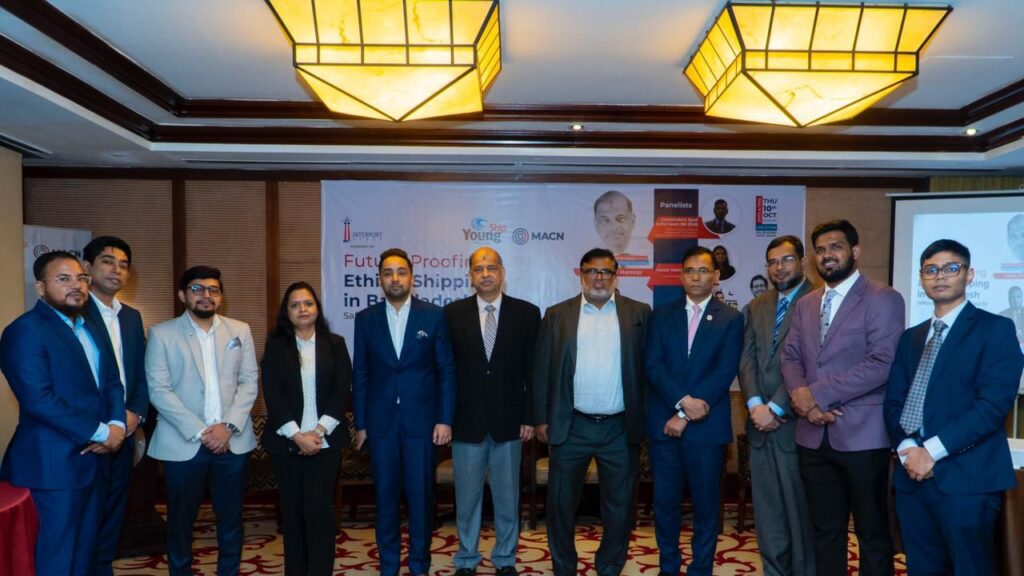
The journey really began in 2021, when I was elected as the youngest Board Director of the Bangladesh Shipping Agents Association (BSAA). Around that time, Commodore Syed Ariful Islam then Project Lead of MACN Bangladesh and former Director General of the Department of Shipping approached me to help organize dialogues on integrity challenges in Bangladesh’s maritime sector. That was my first real exposure to the deeper structural issues in the ecosystem, and it gave me an opportunity to engage with stakeholders who genuinely wanted positive change.
With the full support of BSAA Chairman Mr. Syed Mohammad Arif, we began hosting stakeholder dialogues with MACN Bangladesh, bringing together ship agents, port authorities, Customs, the Mercantile Marine Office, importers, and local shipowners. The idea was simple: to create a neutral space where difficult conversations could happen openly and constructively.
Over time, MACN Bangladesh expanded its engagement, working with organizations such as the Shippers’ Council of Bangladesh, the Marine Surveyors Association, the Ministry of Shipping, the Bangladesh Maritime Law Society, and YoungShip Bangladesh. These collaborations helped shift the mindset from seeing integrity as an individual burden to recognizing it as a shared responsibility.
In 2024, we made a conscious decision to apply for full MACN membership. Commodore Arif often reminded us that integrity isn’t an aspiration, it’s a responsibility. We also wanted to learn from global leaders like Maersk, TORM, Inchcape, and the IG P&I Clubs, while being open about our own experiences.
At Interport, we are guided by a principle passed down by our founder, Capt. MAK: “No one can buy you, until you set your price.” That belief shapes how we operate every day. There is also a clear business case, our international clients value transparency, and trust leads to long-term relationships.
- What challenges did you face implementing MACN guidelines, and how has membership changed daily operations?
The biggest challenge was operating ethically in a market where corruption is often considered “standard procedure.” We faced competitive pressure, lost short-term opportunities, and even direct obstruction. Let me share an example of an incident in April 2024 incident where a local ship agent blocked vessel spares delivery after we refused to pay an unlawful NOC (No Objection Certificate) fee, having no legal basis.
In this incident, we were obstructed in our work of providing agency services to a vessel at Chittagong Port. The vessel was missing a critical spare part, which our team had secured Customs clearance to deliver. However, as we attempted to deliver the parts, the Charterer’s Agent refused to allow us to board the ship, leaving our team member stranded in a small speedboat on rough waters alongside the large vessel for hours. The Charterer’s Agent demanded a bribe in exchange for issuing a NOC fee to allow the delivery. We chose to resist this demand and adhere to our ethical standards, addressing the matter through transparent procedures. We contacted MACN’s Project Lead in Bangladesh for assistance, and through their timely intervention and escalation to the relevant port authorities, we were able to proceed with the delivery of the spare parts, allowing the vessel to depart as scheduled without any delay, despite being a weekend.
As such integrity is no longer an abstract concept for us. It is a daily operational tool that empowers our staff, protects our clients, and reinforces trust across the value chain.
- Can you share an example of a successful MACN-driven initiative that Interport Group led or contributed to?
In recent years, ship agents representing shipowners and managers at Chittagong Port began facing serious challenges due to certain procedural requirements imposed by local authorities. While declaring agents, usually appointed by receivers or charterers, were expected to align with onboard activities, some exploited this rule by withholding what is commonly known as a no-objection certificate (NOC). Without this clearance, shipowners’ agents were unable to arrange essential husbandry services such as crew changes and spares supply unless excessive fees were paid. This practice understandably harmed the port’s reputation among foreign ship operators.
Since 2023, Interport Ship Agents Ltd. has actively worked to address this issue. After consulting maritime professionals, legal advisers, and MACN Bangladesh, we formally raised the matter with the Chairman of the Bangladesh Shipping Agents Association (BSAA), presenting clear evidence of the harassment faced by shipowners’ agents. Taking this stand was not easy, it resulted in months of pressure, false allegations, reputational risks, and operational hurdles. Throughout, we remained fully transparent with shipowners to protect their interests.
Our advocacy eventually led to progress. In September 2024, BSAA, under the leadership of Chairman Mr. Syed Mohammad Arif, formed a 12-member Emergent Committee, which issued a circular clearly defining the roles of declaring and shipowners’ agents and mandating automatic NOC issuance upon proper documentation.
- As maritime operations become more digitized, do you see technology as a safeguard or a new risk for integrity?
I view technology unequivocally as a safeguard. In Bangladesh’s maritime sector, digitalization is one of the most potent instruments to dismantle entrenched corruption. For decades, manual paperwork and discretionary human intervention, particularly in customs and port operations, have created fertile ground for non-transparent practices.
By championing the Single Window Concept and the full digitalization of port and customs processes, we can significantly neutralize these pressure points. Automated clearance systems, e-payments, and digital documentation eliminate cash handling and informal negotiations, while simultaneously generating robust, traceable audit trails.
We are also promoting data-driven monitoring and the transparent online publication of tariffs, ensuring that rules are clear, consistent, and enforceable. In my perspective, digital transformation acts as a disinfectant, it brings operations into the open, making integrity the default, rather than a daily challenge.
- How can Interport leverage its MACN experience to influence other Bangladeshi maritime companies?
Our approach is to lead by example and demonstrate the business case for integrity.
There is a persistent misconception that ethical operations are slower or less profitable. Our experience as the first Bangladeshi full member of MACN proves otherwise. Compliance and transparency have strengthened our credibility with global shipowners, P&I Clubs, and international partners who actively seek clean operations.
We share our journey openly, both successes and challenges. Through the MACN Bangladesh Working Group, we mentor peers by sharing tools, practical frameworks, and even our failures.
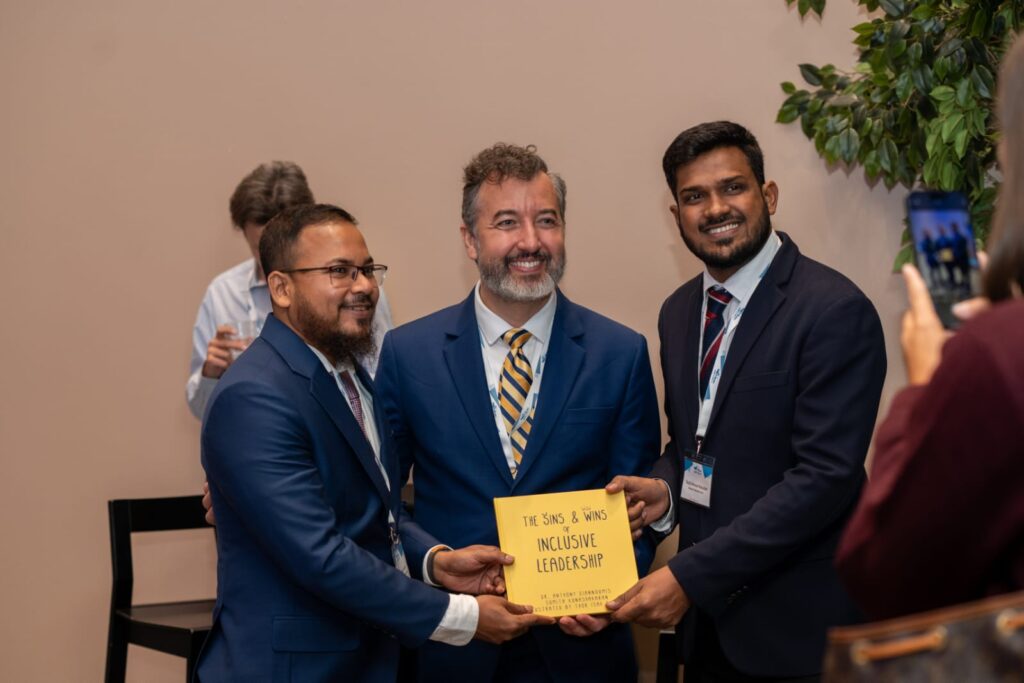
Very recently we published a booklet in the form of case studies of seven incidents where we were faced with unethical/corrupt demands in our ship agency operations to highlight the real challenges we face on a day to day basis and most importantly how, with the support of the MACN and other supporters, we took collective action and resolved each case successfully. The publication was showcased in the first ever Bangladesh Panel of the last MACN member Meeting in December 2025 in Singapore.
Our goal is to drive collective action. Real change happens when the industry moves together, not in isolation.
- What legacy does Interport Group aim to leave in terms of ethics and institutional trust?
Our legacy ambition is simple yet profound, which is to prove that integrity is not a cost, it is an investment.
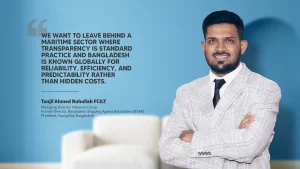
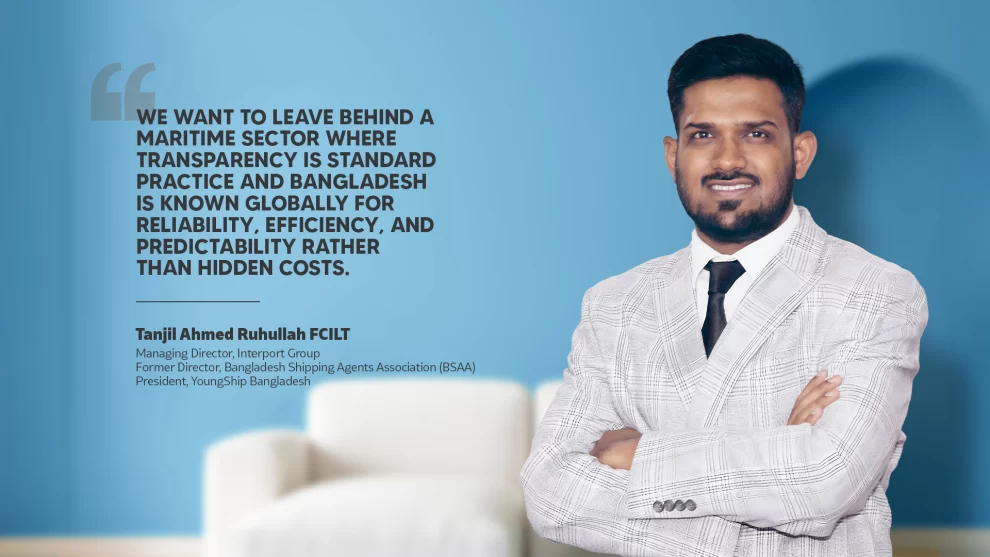
We want to leave behind a maritime sector where transparency is standard practice and Bangladesh is known globally for reliability, efficiency, and predictability rather than hidden costs.
As Bangladesh approaches LDC graduation, dismantling facilitation-payment culture will be critical to attracting investment and unlocking the Blue Economy.