1. Your journey is quite unique—from studying computer science in California during the tech boom to working on governance and election reform. How did that transition happen, and how does your tech background influence your approach to institutional reform today?
I was born in Kuwait and began my schooling at an English-medium school there. When I was in fourth grade, my mother, sisters, and I moved back to Bangladesh. A few years later, my father—who worked as a civil engineer building hospitals for the Ministry of Health—joined us.
For higher studies, I chose Computer Science and Engineering. I’ve always been a hardcore tech enthusiast. I completed my Master’s at California State University, Sacramento, between 2004 and 2006, right at the height of the tech boom, just an hour away from Silicon Valley. Back then, the demand was so high that most of us had job offers before finishing our degrees. I interned at a tech company, and on paper, my future in technology looked very secure. Yet, somewhere inside, I felt something was missing.
During a summer visit to Bangladesh, I noticed a small advertisement in The Daily Star looking for a “young professional” with a tech background and strong English skills. On impulse, I sent my CV—without knowing who the employer was. One afternoon, I received a rather stern phone call asking me to come for an interview within the hour. When I asked where, the answer was simply, “UNDP.” I had no idea what that meant. I rushed home, and my father explained it was the United Nations Development Programme, just as I was heading out.
I walked into that interview with no expectations. By pure chance, the Country Director was on the panel—something very unusual for such a junior role. To this day, I’m not sure what he saw in me, but that moment changed my life. In 2007, I joined the e-governance team and became part of the early work on what later became the government’s flagship A2I program. It was an intense learning phase, and I loved it. In 2009, I moved into an international role and later worked on elections, parliament, and justice sector reform.
My tech background taught me to think in systems and not fear complexity. Governance taught me that institutions are ultimately about people, trust, and process. Today, that balance shapes everything I do at the Election Reform Commission.

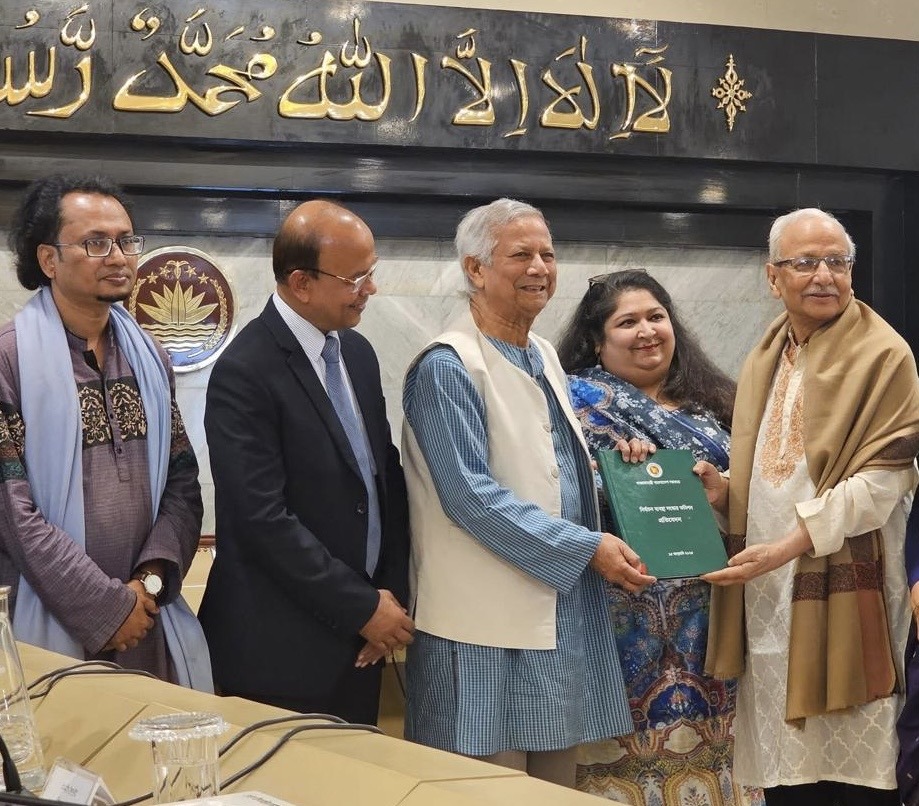
2. You’ve worked with UNDP in Germany, New York, Afghanistan, Pakistan, Malaysia, and Myanmar. What did these vastly different political systems teach you about building credible institutions?
My first posting was with an UNDP-administered office in Germany, followed by a role at the UNDP headquarters in New York, where I joined the Global Elections Team. We supported country offices worldwide on electoral policy. At any given time, statistically, nearly a third of the world’s countries would be holding elections. So it was intense and endlessly fascinating working in that team.
I loved New York—but I kept thinking, development doesn’t happen there. It happens in places like Afghanistan. So when an opportunity came up in Kabul, I applied. It was a straight jump from New York to a conflict zone. I arrived in January 2013 as Programme Specialist – Elections and transitioned to Head of Governance, overseeing UNDP’s then largest governance portfolio globally—worth $1.2 billion and funded by 14 donors. We supported six major areas: elections, parliament, public financial management, local governance, strengthening center of government, and promoting gender equality.
Our first task was getting all stakeholders—President Karzai, Abdullah Abdullah, and international partners—to agree on holding elections in 2014. Tensions were high. After months of negotiation, we secured April 5 as the election date.
Afghanistan was less than 12 months away from its first democratic transition. The election commission had limited capacity, so our team supported everything—from policy and ballot design to recruiting and training over 100,000 staff across 7,000 polling centers. In remote areas, we even used 3,000 donkeys to transport materials as the polling stations could not be reached in any other way.
Then, sixty days before voting, Taliban rocket attacks destroyed an election warehouse. We lost materials—and colleagues. We had to redo $100 million worth of procurement in two months. There was no flexibility. Election day doesn’t move. Somehow, we made it.
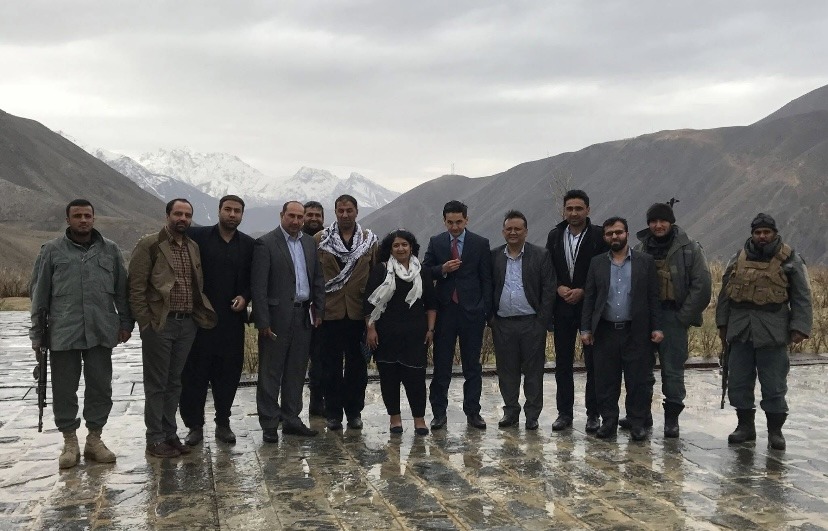
On April 5, I saw people lining up in the rain at a mosque-turned-polling center. It was emotional. It felt real. The election went to a second round, followed by a massive audit. With John Kerry’s mediation, we recounted eight million votes and brought in about 300 electoral observers within a week. Results were finalized in September. Once elections were done I stayed for two more years- totalling four years in Afghanistan, focusing on strengthening parliament, financial systems, and local governance.
Over the next couple of years, I first completed an assignment in Pakistan’s FATA region and in Khyber Pashtunkhwa (KP), where UNDP was running recovery programs for displaced populations. It felt like a spy novel—phones bugged, security negotiations, even a listening device hidden in a bouquet. Then, I went on to study public administration and completed my second Master’s degree at Harvard Kennedy School. I wanted a social science degree to grounding to complement my field experience and my first master’s degree in tech
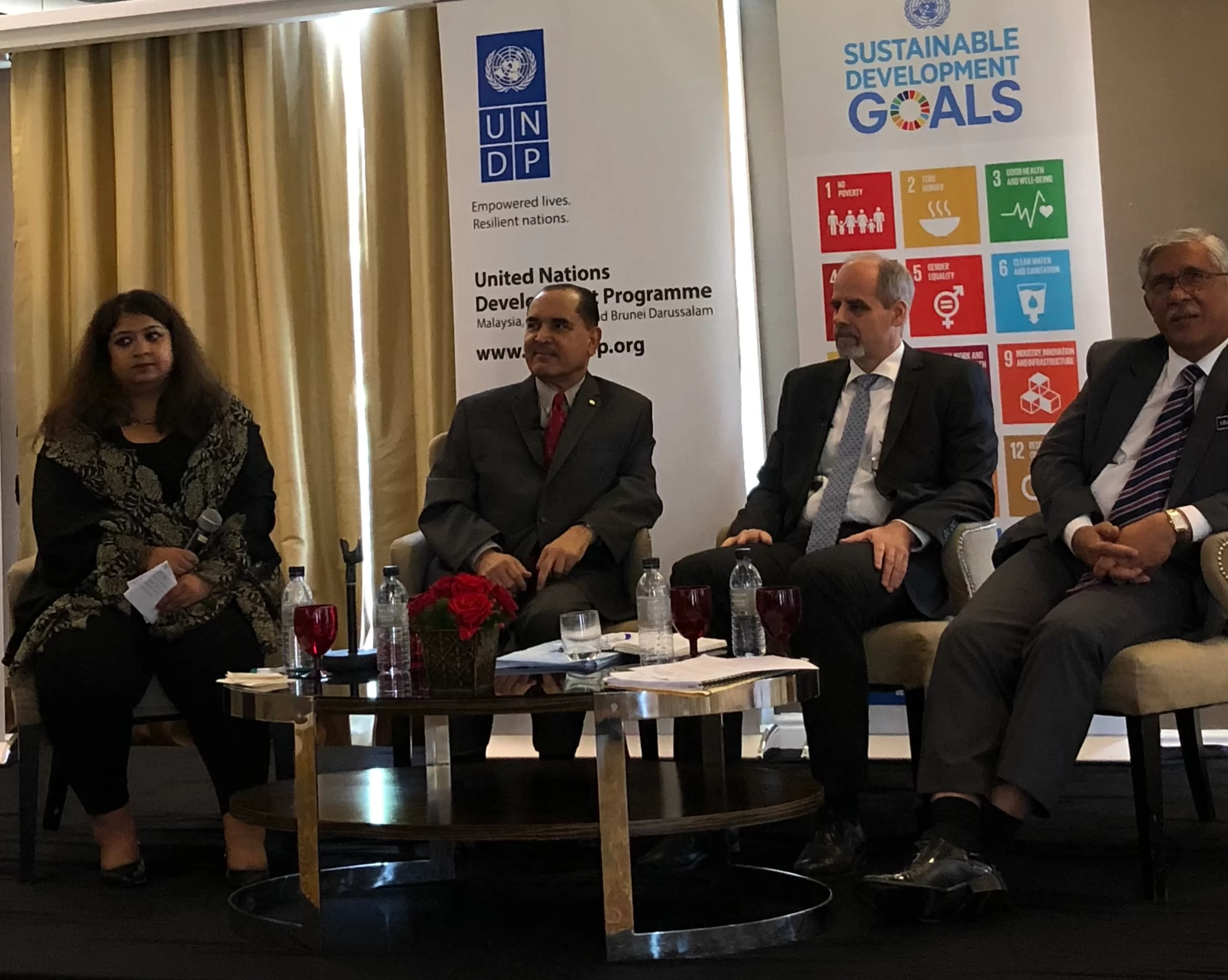
Next came Malaysia. In 2018, a new coalition won after 60 years of a single party being in power. They won on a platform of ambitious governance reform plans, but needed advice on how to implement such reforms holistically. I got a chance to work closely with key institutions such as the election commission, parliament, anticorruption policy body in the Prime Minister’s Office and many other national institutions. It was deeply rewarding working with the Malaysian stakeholders as they had very strong capacities to implement reforms.
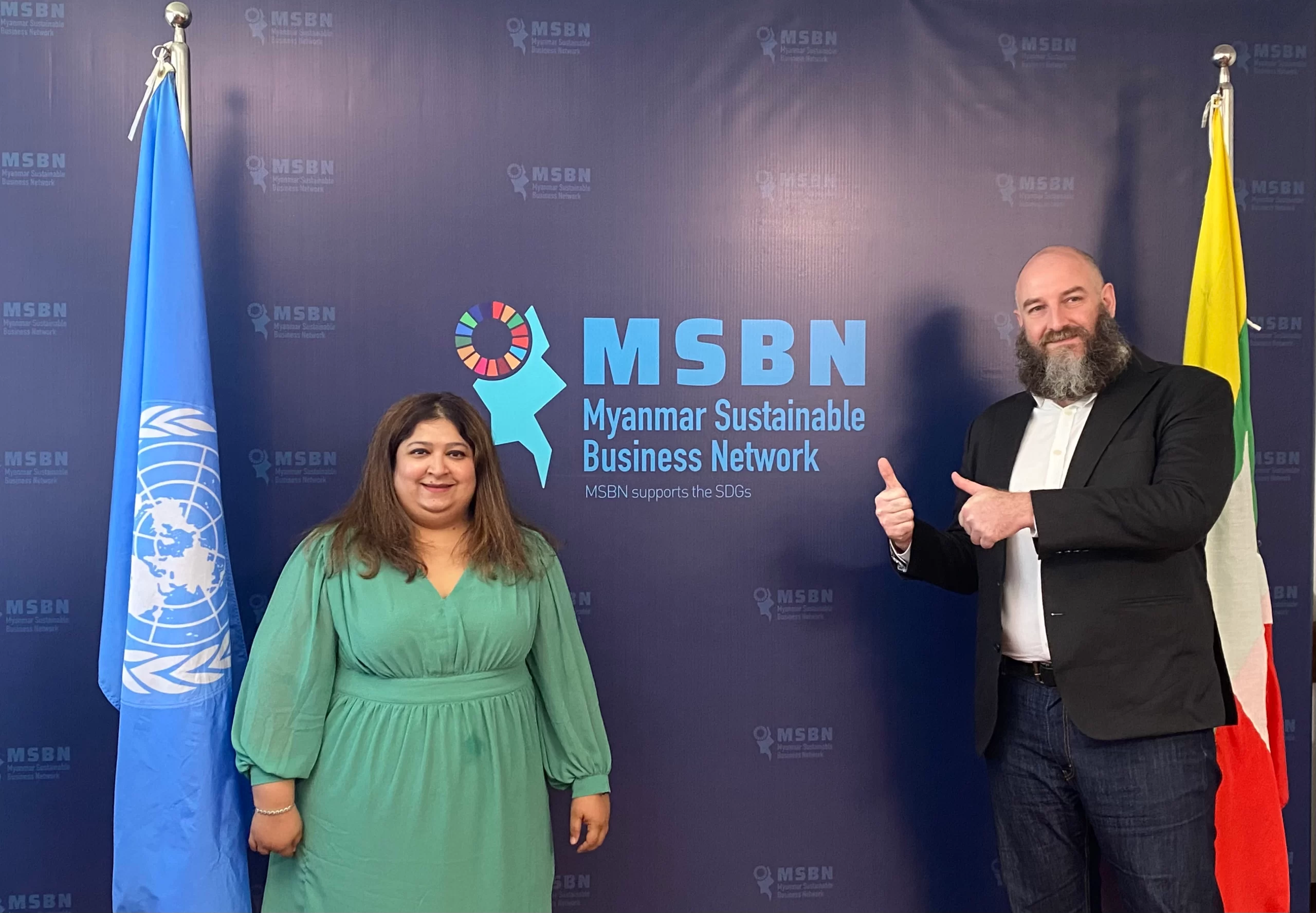
In March 2020, I arrived in Myanmar. Then COVID hit. I managed remotely for months. Just as in-person work resumed, the military coup happened in February 2021. Communication collapsed. Families were terrified. The UN decided to stay. We scrapped our $120 million program and redesigned everything to work directly with people. I introduced digital health, border vaccinations, and the UN’s first AI-based human rights monitoring system.
Each posting taught me something different: in Afghanistan, how to build institutions from scratch; in Pakistan, how to navigate multifaceted complexities; in Malaysia, how to enable capable governments; in Myanmar, how quickly institutions can collapse.
And one final lesson: in the UN, you never take credit. You support elections, but locals get the praise. You build systems, and nations own them. Learning to step back—that’s perhaps the most important part of the job.

3. After 17 years with the UN, advising governments around the world on governance and elections, what was it like to finally come back to Bangladesh and apply that experience to your own country’s reform commission?
By the time I returned to Bangladesh, my UN career had spanned nearly 17 years—the same period during which the country experienced significant political transitions. As someone who had spent her professional life working on governance and institutional reform, it had always been my deepest aspiration to one day serve my own country. Even while advising governments abroad, that goal remained close to my heart.
When the interim government announced six reform commissions on September 11, I was invited to contribute. Although I had experience across most governance areas such as public administration and anti-corruption, I felt that my strongest contribution could be in electoral reform, drawing on nearly two decades of international experience. That is how I joined the Election Reform Commission.
Returning home after many years abroad was both exciting and humbling. I had worked in global settings alongside senior policymakers and institutions, and now I was learning to navigate a new professional environment. It was a valuable period of adjustment—one that strengthened my patience, adaptability, and listening skills.
One of the most important parts of this transition was language. While I was comfortable in Bangla, working with technical and legal terminology required focused effort. I began revisiting key concepts, learning precise terms, and preparing thoroughly before discussions. For legal documents, I studied English versions first and then mastered their Bangla equivalents, which helped me contribute more effectively.
When it came time to write my first chapter, I initially drafted it in English. Soon, I realized how important it was to express complex ideas directly in Bangla. So I learned to type in Bangla and rewrote the material in full. It was challenging, but deeply rewarding. That process strengthened both my communication skills and my connection with colleagues.
These experiences reinforced an important lesson: meaningful contribution often requires continuous learning and adaptation. Whether it was language, systems, or institutional culture, every step became part of my growth.
Today, I feel grateful to be working in a space where my international experience and local commitment come together. Serving Bangladesh—through strengthening democratic institutions and supporting reform—has always been my dream. Being able to pursue that mission at home is both a privilege and a responsibility I deeply value.
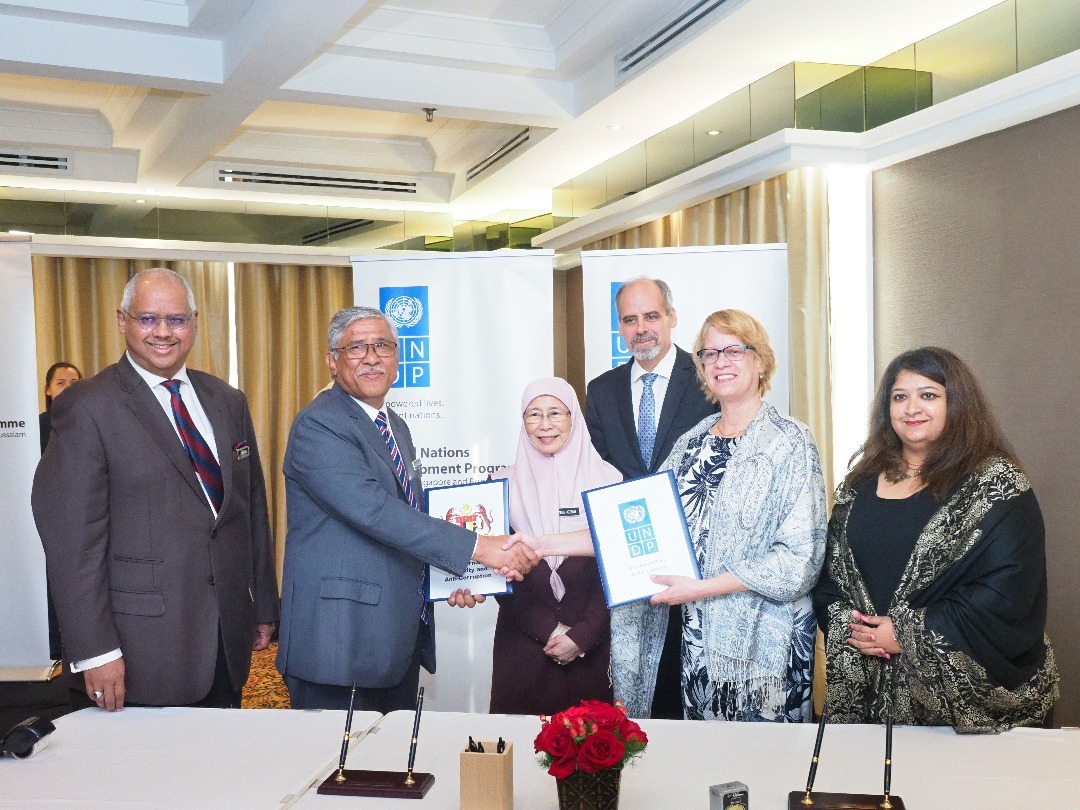
4. If you had to identify three non-negotiable reforms that must be implemented after the election—no exceptions, no delays—what would they be and why?
If you ask me about the three things that must happen after the electionI could talk about this for days. But let me start from the bigger picture.
Our reform agenda falls into three categories. First, reforms that require constitutional change, which must go through the July Charter and a referendum. Second, reforms that need legislative amendments, where while the implementing agency such as the Election Commission, is the main driver, but some political consensus maybe required. Third, reforms that are purely policy and procedural, which fall entirely under the implementing agency’s purview with no requirement for external approval.
With that framework in mind, here are my three non-negotiables.
First: the referendum must happen—and it must pass.
This is foundational. Without constitutional reform, everything else stalls. These amendments are not just another development document; they represent a complete governance reset. We are transitioning from a one-party system to a genuine democratic framework. Our institutions need to be rebuilt from the ground up. There is no option to slide back.
Second: we must urgently address women’s representation in politics.
The current situation is deeply concerning. Despite women being at the forefront of the July ’24 movement, we are now seeing serious backsliding. Out of 51 political parties, 30 did not field a single woman candidate. Only 3.7% of candidates are women—lower than in previous elections. That is simply unacceptable.
We see women’s leadership gradually building in economic and social spheres-albeit slowly. But women’s meaningful participation in politics remains dismally low. They engage in related activities in this sphere such as voting, organizing, and leading movements. Yet leadership positions or political office remains the last stronghold of power, still dominated by patriarchal structures.
Linked to this is the growing problem of cyberbullying. It has become a powerful tool to silence women. When men speak controversially, it stays political. When women do, it becomes personal and vicious. This must stop. After the election, I hope to bring together like-minded people to help address this—through better laws, enforcement, and dedicated cyber teams.
Third: comprehensive public administration reform.
After years of politicization, our civil service needs a serious reset. This is about restoring neutrality, professionalism, and public trust.
One final point on foreign policy.
I deeply appreciate one achievement of Dr. Yunus’s government: for the first time in our history, Bangladesh is pursuing an independent foreign policy. Previously, our direction was often shaped by others. Breaking free from that required international credibility. Professor Yunus provided that momentum.
Now that we have reached this space, safeguarding our sovereignty is everyone’s responsibility. It is not just a reform agenda—it is a national duty.
5. On governance and bureaucracy—if the referendum passes, are you hopeful that we can finally address the separation of powers and rule of law?
Yes, I am hopeful. But it’s important to understand why the referendum matters so much.
At their core, referendums are meant to be simple. They ask clear, binary questions—yes or no. Think of Crimea, South Sudan, or Brexit. The Brexit question was simple, even though its consequences were enormously complex. Many experts knew it would be damaging, but once people voted, that mandate became binding. Successive British governments had no choice but to implement it. That is the power of a referendum—it carries constitutional weight.
In Bangladesh, getting political parties to agree is never easy. It’s like herding cats. Yet, through dialogue, we managed to reach consensus on key constitutional reforms. It is therefore important to lock in these agreements with a referendum. Once the people decide, the next government must follow that mandate.
Our referendum includes four questions, each representing a major reform area. Voters don’t need to master every detail. All of this is captured in the July Charter. The real question is simple: do you want democratic reforms—yes or no?
That’s why I strongly support the referendum as a way to hold the accountability.
Let me share something that gave me real hope. During our time in the reform commission, we opened multiple channels for public feedback—email, website, Facebook, Messenger. Many warned us we’d be flooded with unwanted trolling and messages. Instead, we received over 108,000 thoughtful submissions. I personally read around 50,000. Not one was irrelevant.
It showed me how informed and engaged our people are. I’ve rarely seen this anywhere else.
So yes, I’m hopeful. The people are ready. Now our institutions must rise to the occasion.
6. You’ve worked in Malaysia. How does building an inclusive society there compare to the challenges we face in Bangladesh?
The difference really begins with demography. Malaysia has three major ethnic groups—Malays, Chinese, and Indians. So the society is very used to diversity and is comfortable in the sub-cultural differences. Bangladesh, by contrast, is relatively homogeneous. While that brings certain advantages, it also brings its own challenges- especially in terms of accommodating diversity. For instance, if we had the kind of complex, multi-layered ethnic tensions seen in places like Myanmar, we would have an extremely difficult time.
People often ask me ‘do you think Jamaat will impose Sharia Law if they come to power?’. My response is that I do not believe Jamaat will impose Sharia law per se. But the bigger risk isn’t formal policy—it’s social behavior. Subtle, everyday intolerance can become normalized. People who were once cautious may feel emboldened to judge, control, or comment on others.
That is where the real challenge lies. Building an inclusive society means confronting this quiet validation of intolerance. And honestly, that is much harder than changing any law.
7. Technology, social media, and governance—how do you see these forces shaping our democracy, and what needs to be done?
I like to describe this challenge with one phrase: democratic maturity.
For nearly 17 years under the previous regime, social media in Bangladesh was mostly social. People didn’t express political opinions freely. Now, in 2025, we are suddenly facing the same problems the rest of the world has dealt with for over a decade—foreign bots, misinformation campaigns, manipulated narratives. We saw these issues in places like the Philippines or in the US, where a certain tech company had to appear in parliamentary hearings.
Now, post 2024, those floodgates have opened for us and while we are trying to deal and navigate through it, it feels overwhelming.
Yet, if you filter out the noise, social media, from a democratic governance perspective, is one of the most inclusive tools we have. A physical meeting might reach a hundred people. A Facebook post reaches thousands—and they respond. From Teknaf to Chattogram, people can share their views. That reach is powerful.
The challenge is keeping the good while reducing the harm.
First, we need a legal framework. Most countries have clear laws and codes to deal with misinformation. Our Election Commission still lacks proper social media guidelines for engagement during election times. Many countries now already have them in place.
Second, mainstream media must be responsible. Personally, I now cross-check information with trusted outlets. My faith in traditional media has grown, and they must protect that credibility.
Third—and most important—is individual responsibility. Democratic maturity means learning to question. For instance, my parents believe everything they see on YouTube. I keep reminding them it’s driven by algorithms, not truth and that they need to cross check and validate information that may seem somewhat off
So, the balance comes from three things: informed citizens, accountable media, and strong institutions. That’s how we harness social media’s power without letting it harm democracy.
8. In a politically polarized environment, how important is it to build strong institutions that can function effectively regardless of whether a government is left- or right-leaning?
Let me explain it with an analogy. Think of a panini press or a sandwich maker. You can use it to make any kind of sandwich you like—open-faced or simple. My job is not to decide what sandwich you make. My job is to make sure the machine works. That is governance.
When institutions function properly, its people’s choice that determines what kind of government comes in- right or left of center or anywhere within the political spectrum. Proper, functioning, accountable institutions ensure separation of powers are maintained and the country is governed per democratic principles regardless of the type of government that is in term. If we look at the mature democracies in the West, we note that regardless of the ruling party in power, the institutions and the rules of operations therein keeps the entire system functioning as it should. That is the power of establishing robust and accountable governance.
9. What’s ahead for you now?
I firmly believe that, at various points in life, you are always placed where you are needed and where you can contribute or influence the situation. That belief has been further reinforced during this time. After 17 long years of enthusiastically and dedicatedly serving to promote socio-economic development and democracy, working with many governments, I found myself exactly where I wanted to be. Being part of the democratic reset of my country, a democracy that I saw gradually being dismantled over the same 17 years.
So at now, every morning, I wake up knowing I am and I am available to contribute to Bangladesh in some way—and that makes me genuinely happy. Ihave so far had a good career and if finances or an international displomatic lifestyle were the preference, that door is always open But that is not the priority now. I feel the priority now is to use education, my extensive experience and my knowledge to give back to my country.
I honestly don’t know what happens after the election. The future could go in any direction. A close friend once told me, “You can’t make real decisions with a safety net under you. You become a true gymnast only when the net is gone.” That stayed with me. Sometimes, you have to take the leap first—say no to comfort—and then decide. One thing is certain: whatever I do, I will always try to connect it to serving Bangladesh.
Returning to the UN is always an option, but the challenge is that it may not be easy to connect to Bangladesh per se. This is because as an international civil servant you essentially are not posted in your own country. That’s the rule.
Pursuing a PhD may also be in the cards as that is something my father really wants me to do. But to be honest, I don’t see myself doing that immediately. Right now, I want to work for Bangladesh. Let’s see where that leads.
That is why if I go back to working for the UN, it may not be easy, because as an international civil servant you essentially not posted in your own country.
As an international development personnel, I have always given my utmost to any country that I have had the opportunity to serve. I have been recognized for my dedication and contributions by almost all national stakeholders – government, civil society and local staff and colleagues- wherever I have served. But I have come to realize that working for and in your own country feels different. The stakes feel much more personal. When something goes wrong, I feel it deeply. When something goes right, it’s incredibly fulfilling. And it is that that I want to keep feeling.
10. For someone listening who wants to follow this path, what three lessons would you advise?
First, be selfless. When you enter any country or situation, don’t focus on personal gain or recognition. Focus on how you can genuinely help people. The satisfaction of seeing real impact on the ground is incomparable.
Second, understand the political economy deeply. Don’t stay at the surface. In Myanmar, I had to grasp every layer of conflict dynamics. That depth makes your work more meaningful and effective.
Third, build partnerships. Be creative. I’ve partnered with everyone from tech firms to grocery stores to rice wholesalers. Smart partnerships amplify impact—for everyone involved.
11. You work with people who have high emotional intelligence, but they may not open up easily. How do you build that trust?
Two things.
First, even if people initially don’t always like you, they will respect and trust you if they see your competence. In conflict-affected environments, where people have experienced betrayal and hardship, trust doesn’t come easily. What matters is being sincere and authentic in how you communicate your capability. They may like me or not—but they know I will get the job done. And that gives then the confidence to gradually build up a trust base.
Second, always try to put something on the table that benefits everyone. Think in terms of win-win. In places where we work, where people face poverty, economic harships, human rights abuses and all manner of hardships, it is important to remember that people don’t need to like you immediately; but they need to trust that you can deliver and giving them confidence that you will deliver is vitally important. Once they see that you’re capable and fair—and that you won’t let them down—that’s when real trust begins.
12. You’ve worked in war zones. How do you deal with failure?
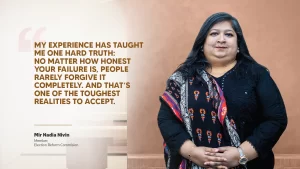
My experience has taught me one hard truth: no matter how honest your failure is, people rarely forgive it completely. And that’s one of the toughest realities to accept. But there are of course degrees of failure. For instance, in the UN system, you are not only accountable to the country you serve—you are also accountable to the donors that fund your program, and who, in turn, is accountable to their taxpayers. Therefore, when it comes to financial decisions, there’s very little margin for error. It is with much relief and satisfaction that I can say that during my entire tenure with the UN, I have never had a financial failure as such.
But over time, I’ve learned a few important things about failure in general.
First, you have to be honest with yourself. More than convincing anyone else, you need to know that you truly gave your best—that you did everything you could, and this was the outcome.
Second, as familiar as it sounds, you must learn from it. If you don’t, the failure is wasted. But when you reflect, adapt, and grow from it, that experience becomes valuable—and it makes you stronger for the next challenge.
13. What is your guilty pleasure?
I love binge-watching—especially spy and political thrillers. I recently watched The Looming Tower, and it was fantastic. When 24 first came out, I actually watched all 24 hours straight.
I’m also an avid reader and spend a lot of time with books whenever I get the chance. And on top of everything else, I’m a huge foodie—I genuinely enjoy exploring different cuisines and discovering good food wherever I go.
14. If a biography were written about you, what would the title be?
I’ve never really thought about it, to be honest. But if I had to choose, I’d probably go with “Kaleidoscope”—because my life and career have been shaped by so many different experiences, places, and perspectives coming together over time.