On the rooftop of the Jatiya Sangsad Bhaban, the parliament building Louis Kahn carved out of light and concrete, rows of solar panels now catch sun the architect intended for something else entirely. It is a small installation, just one megawatt, but the symbolism outpaces the wattage. Bangladesh, long reliant on imported fuel, is rewriting its energy story around the sun.
A nation that imports most of its fuel is betting that solar power can deliver something decades of gas exploration never quite managed, energy security on its own terms. Across rooftops, farmland and industrial corridors, the pieces of that bet are now visibly falling into place.

A Rooftop Program With National Reach
The centerpiece of that bet is the National Rooftop Solar Program, launched in mid-2025 with a target of 3,000 megawatts installed across offices, schools, hospitals and railway stations nationwide. It is an ambitious leap from the 245 megawatts of rooftop solar built over the previous seventeen years, and it signals just how central solar has become to the country’s energy planning.
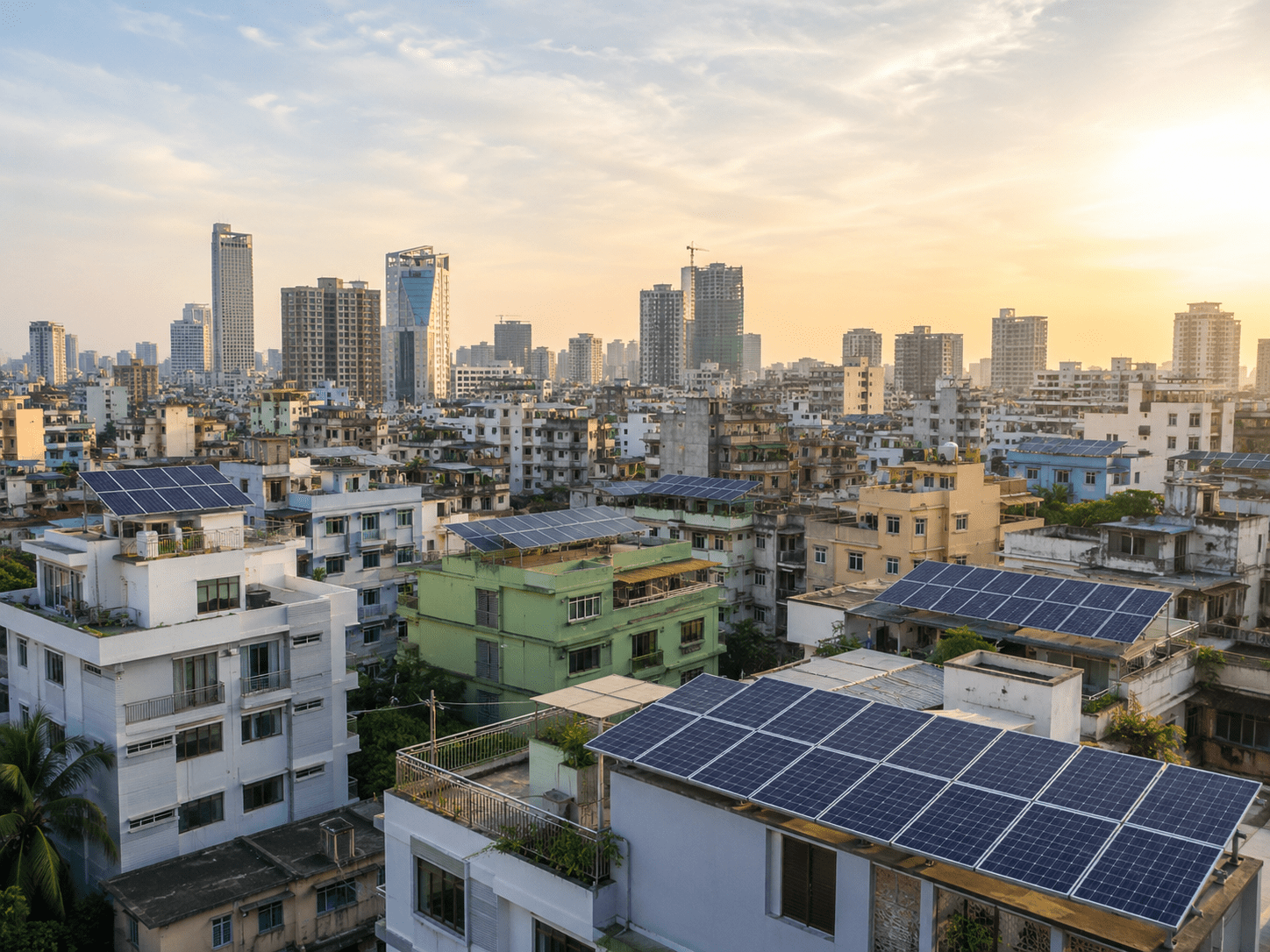
The machinery is turning quickly. Tenders for dozens of megawatts have gone out across Rangpur, Rajshahi and other divisions, and distribution companies are signing twenty-year purchase agreements with private developers. The program runs on two complementary tracks, public capital for offices and zero-upfront-cost arrangements for hospitals and colleges, so that electricity bill savings arrive without any new financial burden on the institutions themselves.
Unlocking the Land That Solar Actually Needs
Rooftops alone cannot carry a national transition, which is why the more consequential move arrived in April 2026, when new guidelines opened unused public land to private developers for utility-scale solar under a public-private partnership model. Railways, road authorities, water boards and other agencies sit on idle tracts that had simply been out of reach for investors before. The Bangladesh Power Development Board now acts as the contracting authority, and a Government Facilitation Agreement is designed to give lenders the confidence they need to finance projects at scale.
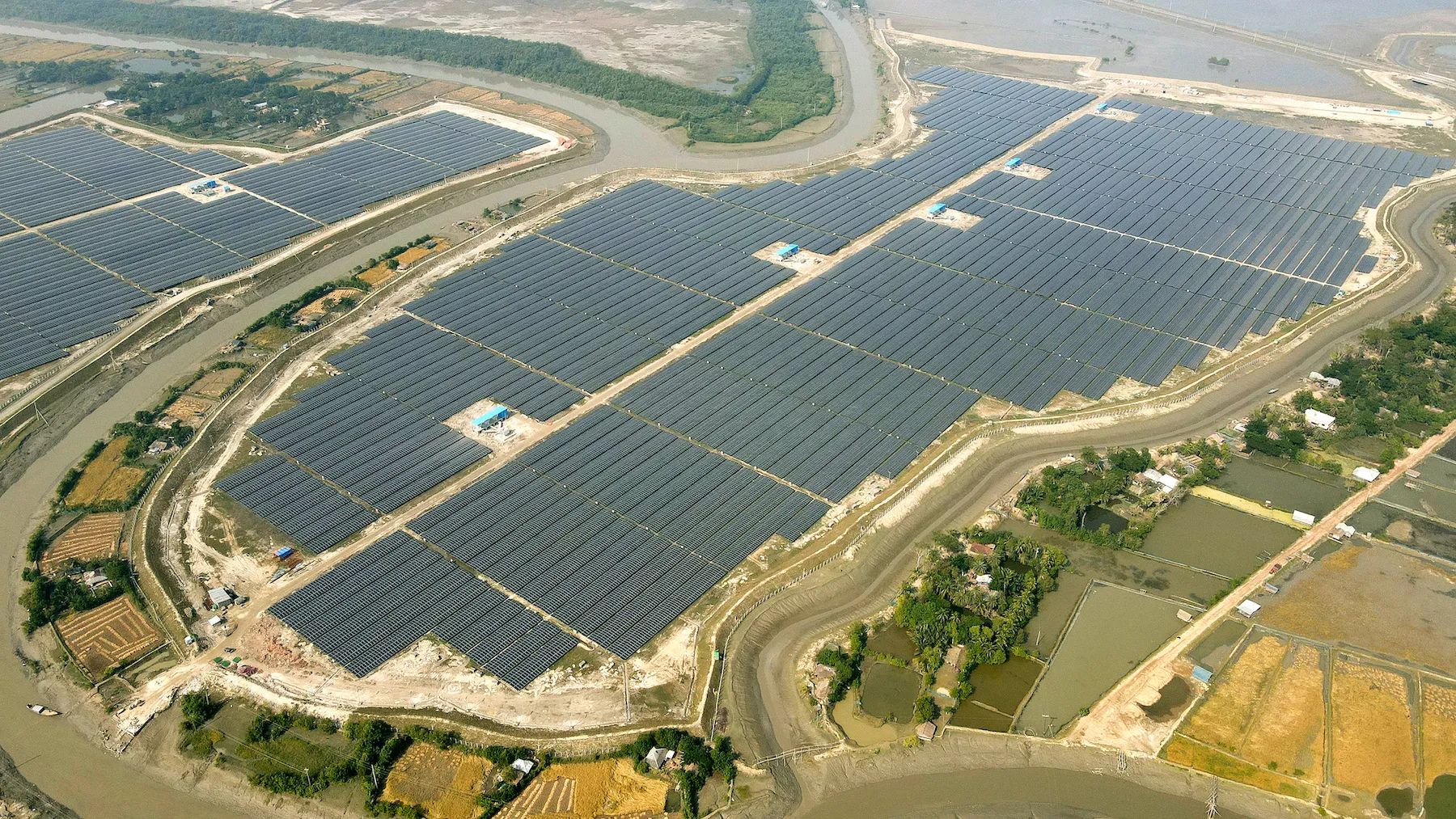
Industry voices in Dhaka have called land access one of the biggest levers for utility-scale solar, on par with financing itself. With that lever now moving, large-scale projects have a much clearer path from proposal to construction.
The Arithmetic Behind the Optimism
The forecasts are striking. Analysts at GlobalData project Bangladesh’s solar capacity climbing from roughly 1.3 gigawatts in 2025 to about 8.5 gigawatts by 2035, a sixfold expansion driven by falling panel costs, tax relief on equipment and a pivot from scattered rural systems toward grid-connected plants. Gulf investors already active in the country’s energy sector are watching that pipeline, and recent coverage of Bangladesh’s investment climate has framed the moment as a genuine opening for foreign capital.
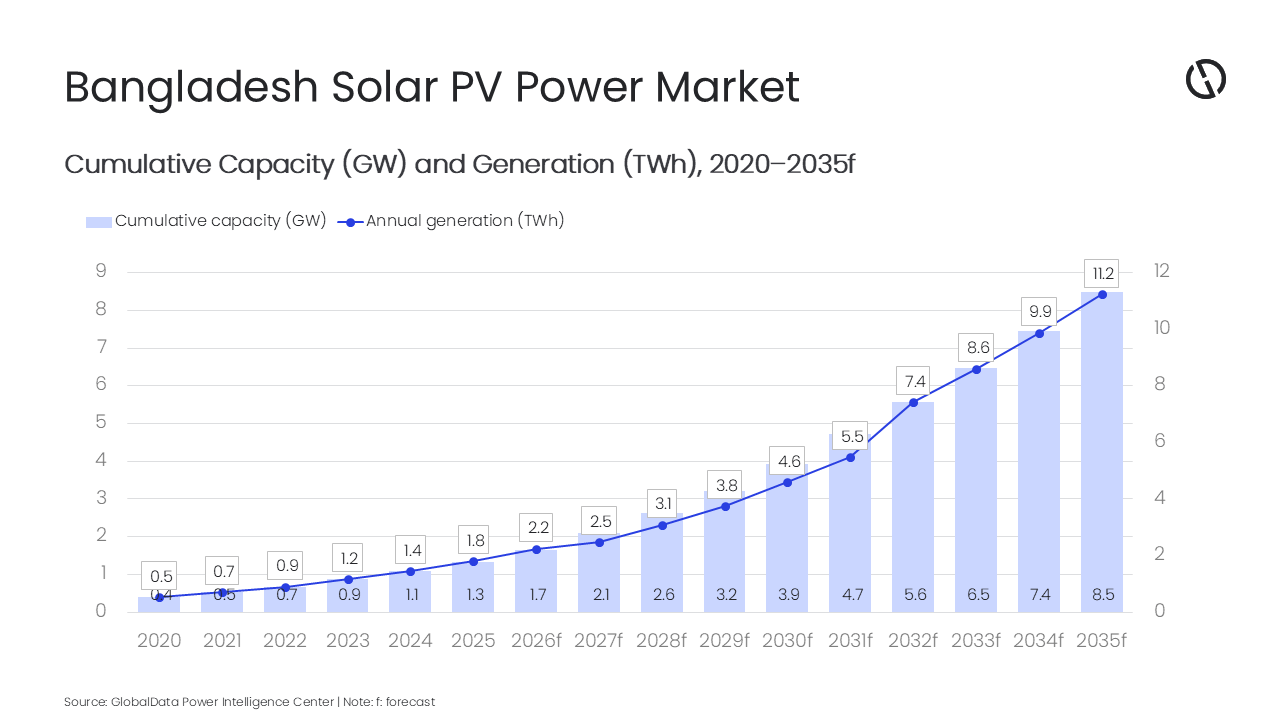
At a rooftop solar inauguration held at parliament in May 2026, officials described solar power as the brightest part of the country’s renewable potential, tying the push directly to national security and economic resilience rather than environmental symbolism alone, a framing that resonates in a country still working through fuel import costs.
Plenty of work remains. Gas will still anchor the grid for years, and land mapping is an ongoing effort rather than a finished one. But momentum compounds. A rooftop program built for national reach, a land framework built to unlock investment, and a decade-long forecast that finally points toward real scale. Together they suggest a country no longer just talking about clean energy, but building the machinery to deliver it.